

Foreign Body Obstruction in Dogs and Cats: A Veterinarian’s Perspective

By a Small Animal Veterinarian
Foreign body obstruction is a common and potentially life-threatening condition encountered in small animal veterinary practice. It occurs when a dog or cat ingests an object that becomes lodged in the gastrointestinal (GI) tract, impeding the normal passage of food and fluid. This article offers a veterinary perspective on the causes, diagnosis, treatment, and prevention of foreign body obstruction in dogs and cats.
Etiology: Why Pets Eat Inappropriate Items
Dogs and cats, especially young animals, are naturally curious and often explore the world with their mouths. Dogs are notorious for ingesting non-food items due to their indiscriminate eating habits, while cats—particularly kittens—may chew on string-like materials due to their play instincts.
Common foreign bodies include:
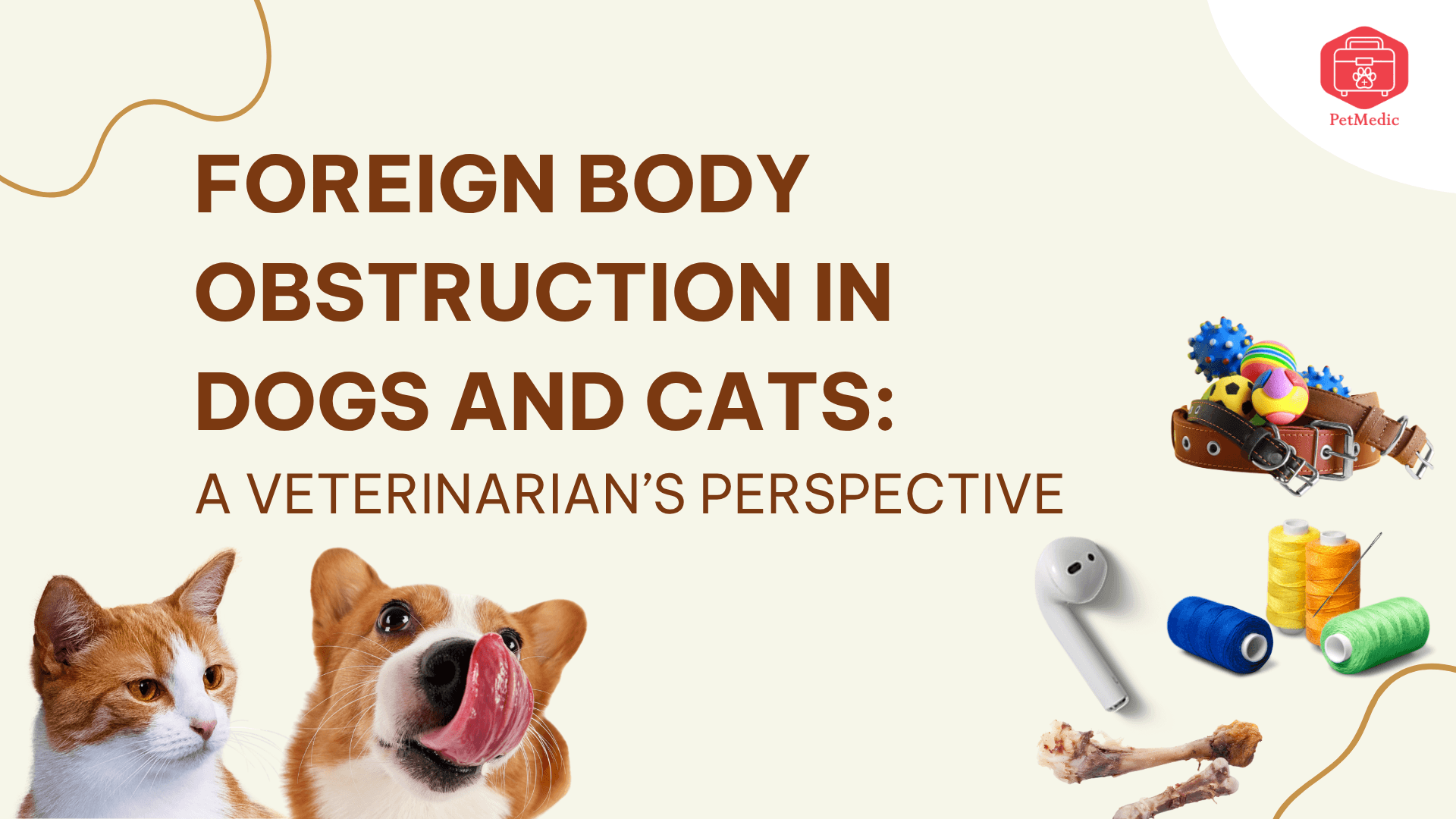
- In dogs: toys, bones, socks, underwear, corn cobs, plastic, rocks, and tampons.
- In cats: string, yarn, hair ties, sewing needles, tinsel, and rubber bands.
Some animals have underlying behavioral or medical conditions (e.g., pica, dietary deficiencies, boredom, anxiety) that predispose them to ingest foreign materials.
Clinical Signs
Clinical presentation can vary depending on the location, type, and duration of the obstruction. Common signs include:
- Vomiting (with or without bile)
- Anorexia or decreased appetite
- Abdominal pain or distension
- Lethargy
- Diarrhea or constipation
- Straining to defecate or producing small amounts of stool
- Dehydration
- Restlessness or behavioral changes
In cats, linear foreign bodies (e.g., string) can cause unique symptoms such as “pleating” of the intestines, which may lead to intestinal perforation.
Diagnosis
Diagnosis begins with a thorough history and physical examination, often revealing an acutely or chronically ill animal with abdominal discomfort.
Diagnostic tools include:
- Abdominal radiographs: May reveal obstructive patterns (dilated gas-filled loops of intestine), foreign material, or plication in linear foreign bodies.
- Contrast radiography: Useful if a radiopaque object is not visible.
- Abdominal ultrasound: Highly effective in identifying the location and nature of the obstruction.
- Endoscopy: Can be diagnostic and therapeutic in cases involving upper GI foreign bodies.
A complete blood panel may reveal dehydration, electrolyte imbalances, or signs of systemic inflammation.
Treatment Options
Treatment depends on the type and location of the foreign body, and the severity of the obstruction.
- Medical Management For small, non-sharp foreign objects that are likely to pass without complication, a conservative approach may be attempted:
- IV fluids
- Gastroprotection’s
- Monitoring for passage via feces
- Repeat imaging
- IV fluids
- This approach requires careful case selection and close monitoring.
- Endoscopic Removal Minimally invasive and suitable for objects in the esophagus or stomach (e.g., balls, bones). Success depends on size, shape, and chronicity of the object.
- Surgical Intervention Required in cases of complete obstruction, perforation, peritonitis, or failed medical/endoscopic attempts.
- Gastrotomy or enterotomy is performed to remove the object.
- In severe cases, intestinal resection and anastomosis may be necessary.
- Post-operative care includes antibiotics, pain management, fluid therapy, and gradual reintroduction to food.
- Gastrotomy or enterotomy is performed to remove the object.
- Prognosis is generally good with prompt surgical intervention, though complications such as sepsis or dehiscence can occur if diagnosis or treatment is delayed.
Prevention and Client Education
Preventing foreign body ingestion is ultimately the best strategy. Veterinarians should emphasize the following to pet owners:
- Pet-proof the home environment, especially with kittens and young dogs.
- Provide safe chew toys and enrich the pet’s environment.
- Discourage access to trash, laundry, and children’s toys.
- Monitor pets closely, especially after holidays or events where dangerous items (e.g., tinsel, ribbon, bones) are common.
- Address behavioral issues such as boredom or separation anxiety that may drive pica.
Clients should be educated on early warning signs and encouraged to seek veterinary attention promptly if ingestion is suspected.
Conclusion
Foreign body obstruction is a frequent emergency in small animal practice, requiring timely diagnosis and intervention. With advances in imaging and minimally invasive techniques, outcomes have improved significantly. However, prevention and education remain key components in reducing the incidence and recurrence of these cases. As veterinarians, staying vigilant and fostering strong communication with pet owners are essential steps in managing and preventing foreign body cases in our patients.