

A Simple Pancreatitis Risk Checklist for Pet Owners

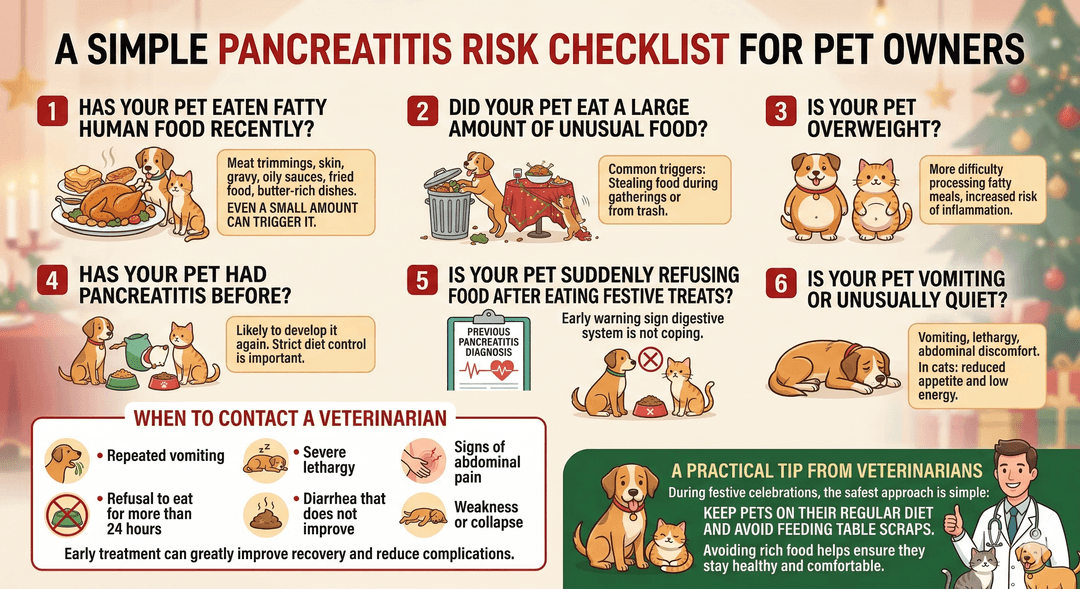
A Simple Pancreatitis Risk Checklist for Pet Owners
During festive seasons, many cases of pancreatitis happen because pets accidentally eat food that is too rich or fatty for their digestive system. This quick checklist can help pet owners recognize when their pet may be at higher risk.
If you answer “Yes” to several of these questions, it may be safer to avoid giving any festive food and monitor your pet closely.
1. Has your pet eaten fatty human food recently?
Examples include:
- Meat trimmings
- Roasted chicken or duck skin
- Gravy or oily sauces
- Fried food
- Butter-rich dishes
Even a small amount of fatty food can trigger pancreatitis in sensitive pets.
2. Did your pet eat a large amount of unusual food?
Pets sometimes steal food during gatherings or from the trash.
Eating a large quantity of rich food in a short time is one of the most common triggers for pancreatitis, especially in dogs.
3. Is your pet overweight?
Overweight pets tend to have more difficulty processing fatty meals.
Excess body fat can also increase the risk of inflammation and metabolic problems.
4. Has your pet had pancreatitis before?
Pets that have experienced pancreatitis in the past are more likely to develop it again, particularly if they eat high-fat food.
For these pets, strict diet control is very important.
5. Is your pet suddenly refusing food after eating festive treats?
Loss of appetite after eating rich food may be an early warning sign that the digestive system is not coping well.
6. Is your pet vomiting or unusually quiet?
Vomiting, lethargy, or abdominal discomfort after eating unusual food may indicate digestive irritation or pancreatitis.
In cats, the signs may simply be reduced appetite and low energy.
When to Contact a Veterinarian
If your pet shows any of the following signs, it is best to seek veterinary advice:
- Repeated vomiting
- Refusal to eat for more than 24 hours
- Severe lethargy
- Signs of abdominal pain
- Diarrhea that does not improve
- Weakness or collapse
Early treatment can greatly improve recovery and reduce complications.
A Practical Tip from Veterinarians
During festive celebrations, the safest approach is simple:
Keep pets on their regular diet and avoid feeding table scraps.
Your pet may not know it’s a holiday feast, but avoiding rich food can help ensure they stay healthy and comfortable throughout the festive season. 🐶🐱