

My Dog Has a Growth. Should I Be Worried?

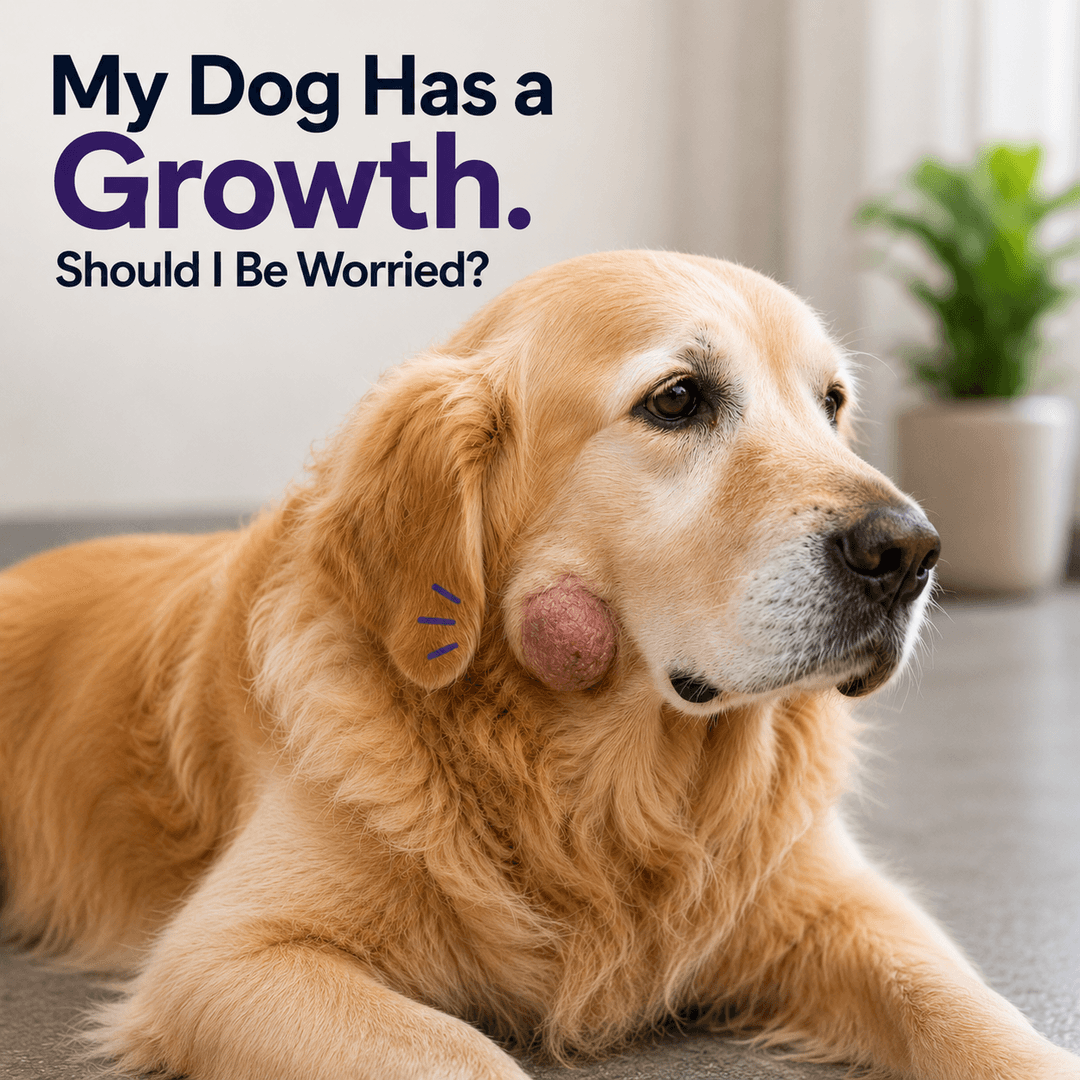
Finding a lump or growth on your dog can be worrying. It’s natural for the first thought to be, “Could this be cancer?”
The reassuring news is that not every growth is cancer. In fact, many lumps we see are harmless, especially in middle-aged and senior dogs.
However, it’s also important to remember that some serious conditions can look very similar to harmless ones. The only reliable way to know what you’re dealing with is to have it examined.
What Could the Growth Be?
Dogs can develop many different types of growths throughout their lives. Some of the more common ones include:
- Fatty lumps (lipomas)
- Skin tags
- Sebaceous cysts
- Warts
- Infected swellings or abscesses
- Benign tumours
- Cancerous tumours
From the outside, many of these can look almost identical. Even experienced veterinarians cannot always identify a lump just by looking or feeling it.
That’s why we often recommend a simple test called a fine needle aspiration (FNA), where a few cells are collected with a small needle and examined under the microscope. It’s quick, minimally invasive and often gives us valuable answers.
What Should You Watch For?
Not every lump is an emergency, but it’s worth paying attention to changes such as:
- A growth that is getting bigger.
- A lump that suddenly appears.
- Bleeding, ulceration or discharge.
- Redness or signs of infection.
- Pain when touched.
- A lump that interferes with walking, eating or normal movement.
One simple tip is to take a clear photo and measure the lump with a ruler or even compare it to a coin. Checking it every few weeks makes it much easier to notice whether it is changing.
Does Every Lump Need Surgery?
Not necessarily.
Some harmless growths can simply be monitored if they remain unchanged and are not causing discomfort.
Others may need to be removed because they continue growing, become infected, interfere with movement, or are suspected to be cancerous.
Every lump is different, which is why an individual assessment is so important.
What We Often See in Practice?
One question we hear very often is,
“Doctor, it’s been there for months. Should I have brought my dog earlier?”
Our answer is always the same:
It’s never too late to ask a question about your pet’s health.
Some owners worry they’ll be wasting the veterinarian’s time if the lump turns out to be harmless. In reality, we’d much rather reassure you that a lump is nothing serious than discover months later that we missed the opportunity to diagnose a treatable problem early.
One Thing I’d Like Every Pet Owner to Remember
Not every growth is dangerous, but every new growth deserves your attention.
Most lumps turn out to be manageable. The important thing is not to guess. Early assessment gives you peace of mind and, if treatment is needed, usually gives your pet the best possible outcome.
Sometimes, the smallest lump can tell the biggest story—and sometimes, it’s simply there to remind us that checking early is always better than wondering later.