

Raisin & Grape Poisoning in Dogs: A Small Snack That Can Cause Big Problems

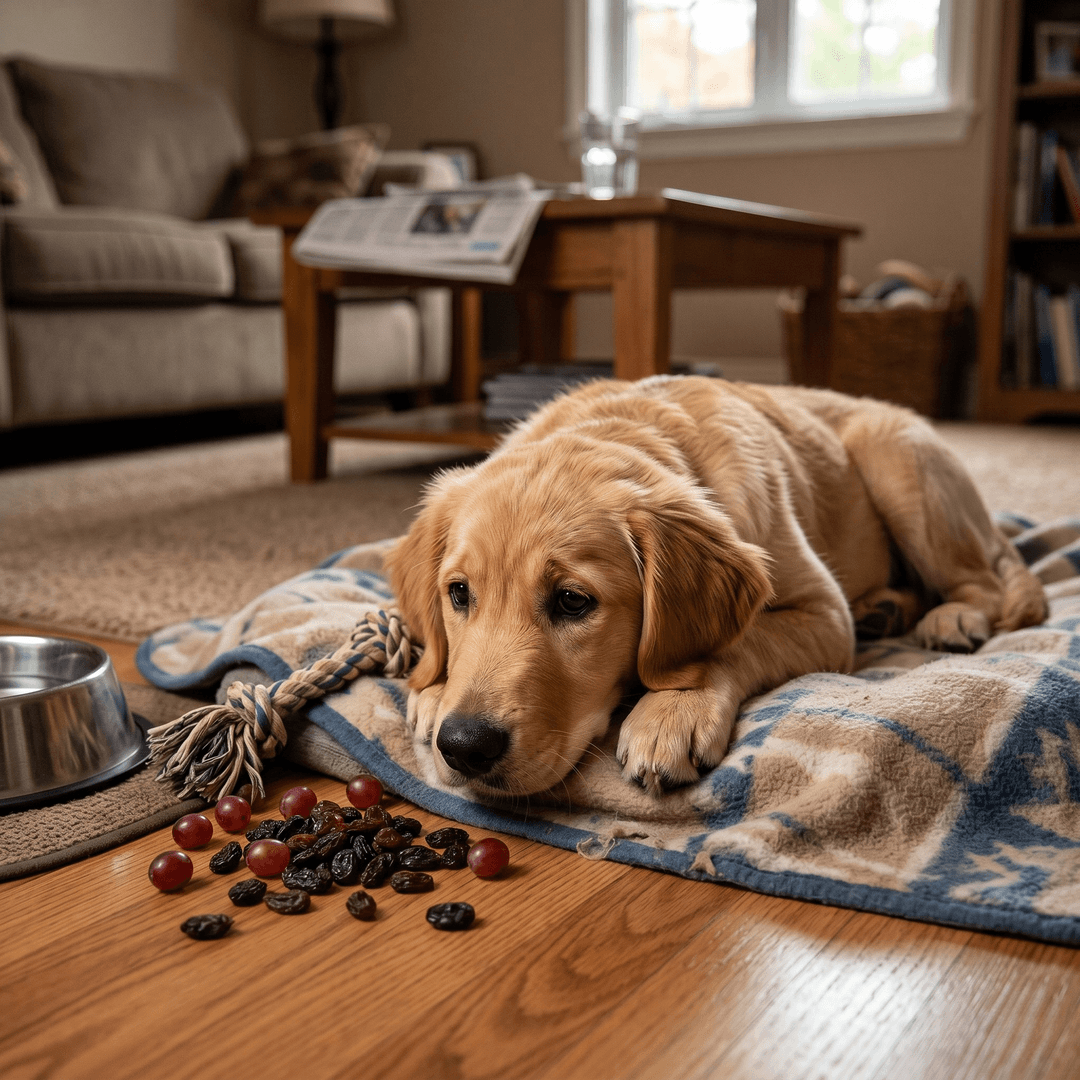
Grapes and raisins are often seen as healthy snacks for people—but for dogs, they can be highly toxic and unpredictable.
As veterinarians, this is one of the more worrying poisonings because even a small amount can lead to serious kidney damage, and not every dog reacts the same way.
Why Are Grapes and Raisins Dangerous?
The exact toxin in grapes and raisins is still not fully understood, but we do know the effect:
👉 They can cause acute kidney failure in dogs.
What makes this condition challenging is that:
- Some dogs become very sick after eating only a small amount
- Others may eat more and show milder signs
- There is no safe dose we can confidently recommend
Because of this unpredictability, any ingestion should be taken seriously.
Fresh Grapes vs Raisins: Which Is Worse?
Both are toxic, but:
- Raisins are more concentrated, so they are generally more dangerous per piece
- Foods containing raisins can also be risky, such as:
- Raisin bread
- Cakes and pastries
- Trail mix
Even if the amount seems small, it is not worth the risk.
Which Pets Are Affected?
- Dogs are highly susceptible
- Cases in cats are very rare, but ingestion should still be avoided
Any dog—regardless of breed, age, or size—can be affected.
Early Signs of Poisoning
Symptoms often begin within 6–12 hours after ingestion.
Common early signs include:
- Vomiting
- Loss of appetite
- Lethargy (low energy)
- Diarrhea (sometimes)
You may even see grape or raisin pieces in the vomit.
Signs of Kidney Damage (More Serious Stage)
Within 24–72 hours, more severe signs may develop:
- Reduced or no urination
- Weakness
- Dehydration
- Bad breath (uremic smell)
- Abdominal pain
Once kidney failure develops, the condition becomes much more serious and difficult to treat.
What Should You Do If Your Dog Eats Grapes or Raisins?
Do not wait for symptoms.
Take action immediately:
- Remove access to the food
- Check how much may have been eaten
- Contact your veterinarian right away
Early treatment—especially within the first few hours—can greatly reduce the risk of kidney damage.
How Veterinarians Treat This Condition
Treatment is most effective when started early.
Common steps include:
- Inducing vomiting (if ingestion was recent)
- Activated charcoal (in some cases)
- Intravenous fluids for 24–48 hours to protect the kidneys
- Blood tests to monitor kidney function
Dogs treated early often recover well.
Delayed treatment increases the risk of permanent kidney damage or failure.
When Is It an Emergency?
Treat all grape or raisin ingestion as urgent, even if your dog looks normal.
Seek immediate veterinary care if:
- You saw your dog eat grapes or raisins
- Your dog vomits after possible ingestion
- Your dog becomes quiet, weak, or refuses food
Preventing Raisin & Grape Poisoning
During festive seasons, these foods are commonly found in homes.
Simple precautions include:
- Keep grapes and raisins out of reach
- Be cautious with baked goods and snacks
- Inform family members and guests not to feed pets
- Check ingredients in foods before sharing
A Veterinarian’s Final Advice
Grapes and raisins may seem harmless, but in dogs, they can lead to serious and sudden kidney failure.
The most important takeaway is simple:
👉 There is no known safe amount.
If your dog eats even a small quantity, early veterinary attention can make a life-saving difference.
When it comes to grapes and raisins, it’s always better to act fast rather than wait and see. 🐶