

Why Is My Dog or Cat Licking Their Paw? A Veterinarian’s Guide

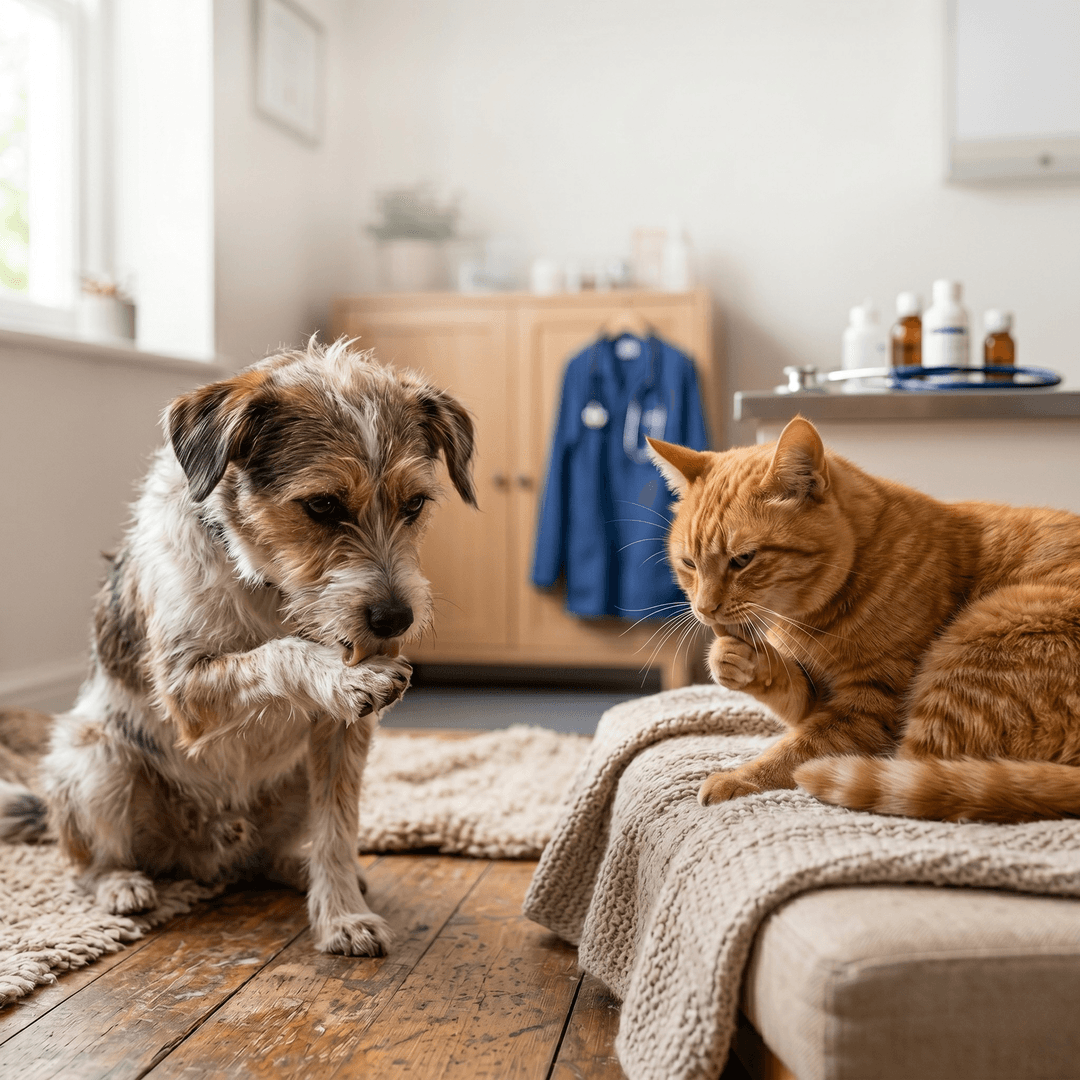
Occasional paw licking is normal grooming. But when a pet licks one paw repeatedly or keeps chewing at it, it usually means something is wrong.
As veterinarians, paw licking is one of the most common complaints we see—and the cause can range from simple irritation to chronic allergies or pain.
What’s Normal vs Not Normal?
- Normal: brief licking during grooming, no redness, no smell
- Not normal: frequent licking, chewing, or one paw always targeted
If you notice your pet focusing on the same paw over and over, it’s worth investigating.
Common Causes of Paw Licking
1. Allergies (Very Common)
Allergies are one of the top reasons for paw licking
Triggers include:
- Grass and pollen
- Dust mites
- Food allergies
Typical signs:
- Redness between toes
- Brown saliva staining on fur
- Licking of multiple paws
2. Skin Infection (Bacterial or Fungal)
Constant licking creates a moist environment, which allows bacteria or yeast to grow.
Signs:
- Bad odor
- Sticky or oily skin
- Swelling
- Discharge
This often becomes a cycle: itch → licking → infection → more itch.
3. Foreign Objects
Sometimes, something is physically stuck in the paw.
Examples:
- Grass seeds
- Small splinters
- Dirt trapped between toes
These cases often involve:
- Sudden onset
- Licking of one paw only
- Pain or limping
4. Injury or Pain
Pets may lick a paw because it hurts, not because it itches.
Possible causes:
- Cuts or wounds
- Broken nails
- Sprains
- Joint pain (especially in older pets)
5. Parasites
Parasites like mites can cause intense irritation.
Although less common than allergies, they should be considered—especially if:
- The itching is severe
- Other parts of the body are affected
6. Behavioral (Stress or Boredom)
In some pets, especially dogs, paw licking can become a habit.
Triggers:
- Anxiety
- Boredom
- Lack of stimulation
This usually develops after an initial physical issue and continues as a self-soothing behavior.
When Should You Be Concerned?
Seek veterinary advice if you notice:
- Persistent licking for more than a few days
- Redness or swelling
- Bad smell from the paw
- Limping
- Bleeding or open wounds
- Hair loss around the paw
Early treatment helps prevent the condition from becoming chronic and harder to manage.
What You Can Do at Home (Short-Term)
While waiting to see a vet, you can:
- Check the paw for visible wounds or objects
- Gently clean with saline or mild antiseptic
- Keep the paw dry
- Prevent excessive licking (e.g., using a collar if needed)
Avoid using human creams unless advised, as some can be harmful if licked.
How Veterinarians Treat Paw Licking
Treatment depends on the cause:
- Allergies → anti-itch medication, diet trials
- Infections → medicated washes, antibiotics or antifungals
- Foreign body → removal
- Pain/injury → pain relief and rest
In many cases, especially allergies, this becomes a long-term management condition rather than a one-time fix.
A Veterinarian’s Final Advice
Paw licking is not just a “bad habit”—it is often your pet’s way of telling you something is wrong.
The key is to look for patterns:
👉 One paw → think injury or foreign object
👉 Multiple paws → think allergies
If caught early, most causes are much easier to treat. Ignoring it can lead to infection, chronic skin disease, and ongoing discomfort.
When in doubt, it’s always better to check—because a small lick today can turn into a big problem tomorrow. 🐶🐱