

Is Your Senior Pet Developing Dementia? Understanding Cognitive Dysfunction in Dogs & Cats

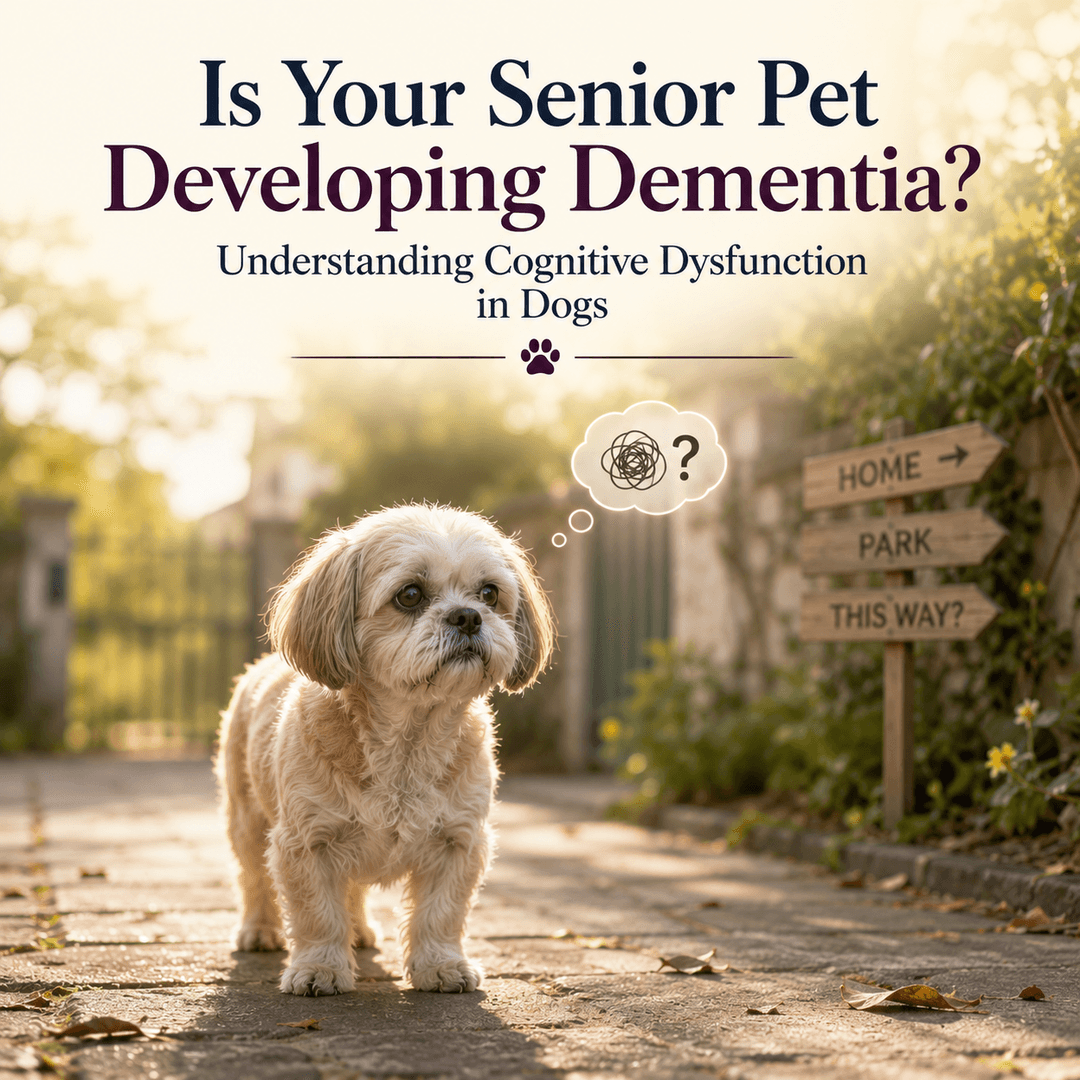
Many pet owners expect their senior dog or cat to slow down with age. However, when an older pet starts getting lost in familiar places, stares blankly at walls, or wakes up crying in the middle of the night, it may be more than “just getting old.”
As veterinarians, we often diagnose a condition called Cognitive Dysfunction Syndrome (CDS)—commonly referred to as pet dementia.
The good news is that early recognition and appropriate management can significantly improve your pet’s quality of life.
What is Cognitive Dysfunction Syndrome?
Cognitive Dysfunction Syndrome is an age-related decline in brain function, similar in many ways to dementia in humans.
As pets age, changes occur in the brain, including:
- Loss of brain cells
- Reduced blood flow to the brain
- Chronic inflammation
- Oxidative stress
- Accumulation of abnormal proteins
These changes gradually affect memory, learning, awareness, and normal behaviour.
Studies estimate that up to 30–40% of dogs over 11 years of age show at least one sign of cognitive dysfunction, while the condition is also increasingly recognised in senior cats. Unfortunately, many cases go undiagnosed because owners assume the changes are simply part of ageing.
Common Signs to Watch For
Veterinarians often use the acronym DISHAA to help identify cognitive dysfunction.
D – Disorientation
Your pet may:
- Get stuck behind furniture
- Stare at walls or into space
- Seem lost in familiar surroundings
- Wander aimlessly around the house
I – Changes in Interaction
Your pet may:
- Become less interested in family members
- Seek excessive attention
- Become unusually withdrawn
- Interact differently with other pets
S – Sleep-Wake Cycle Changes
You may notice:
- Sleeping more during the day
- Restlessness at night
- Pacing after dark
- Barking or meowing during the night
H – House Soiling
A previously house-trained pet may:
- Urinate or defecate indoors
- Forget where the litter tray is
- Have accidents despite wanting to be clean
A – Activity Changes
Your pet may:
- Pace repeatedly
- Wander without purpose
- Show reduced interest in toys or walks
- Seem confused about familiar routines
A – Anxiety
Some pets become:
- More fearful
- Easily startled
- Clingy
- More vocal
- Less confident in new situations
Could It Be Something Else?
Not every behavioural change is caused by dementia.
Similar signs may also result from:
- Vision or hearing loss
- Arthritis and chronic pain
- Kidney disease
- Liver disease
- High blood pressure
- Brain tumours
- Hormonal disorders
This is why a veterinary examination and, in many cases, blood tests are important before diagnosing cognitive dysfunction.
Can It Be Treated?
While there is currently no cure, many pets can enjoy a much better quality of life with early intervention.
Treatment often includes:
Brain Enrichment
Just like people, pets benefit from keeping their brains active.
Try:
- Gentle daily walks
- Puzzle feeders
- Food-search games
- Learning simple new tricks
- Regular interaction with family members
Nutrition
Research suggests certain nutrients may support brain health, including:
- DHA (Omega-3 fatty acids) for brain cell function
- EPA to help reduce inflammation
- Astaxanthin and blueberry extract to combat oxidative stress
- Curcumin to support healthy inflammatory responses
- Beta-glucan to support immune health
Many veterinary senior supplements combine these ingredients as part of a comprehensive healthy-ageing programme.
Medication
Depending on your pet’s condition, your veterinarian may prescribe medications that improve brain function or help manage anxiety and disrupted sleep patterns.
Creating a Dementia-Friendly Home
Small changes at home can make a big difference.
You can help by:
- Keeping furniture in the same place
- Maintaining a consistent daily routine
- Using night lights to improve visibility
- Providing non-slip flooring
- Keeping food, water, and litter trays easily accessible
- Avoiding sudden environmental changes
Consistency helps reduce confusion and anxiety.
Can Cognitive Decline Be Prevented?
We cannot completely prevent brain ageing, but we may be able to slow its progression.
Healthy habits include:
- Regular veterinary health checks
- Maintaining an ideal body weight
- Daily physical exercise
- Mental stimulation
- Good dental care
- Early treatment of medical conditions
- A balanced diet with evidence-based brain-supporting nutrients
Starting these measures before obvious signs appear offers the greatest chance of preserving brain health.
The Bottom Line
Growing older doesn’t mean your pet has to lose their personality.
If your senior dog or cat seems confused, forgetful, restless at night, or behaves differently than before, don’t assume it’s simply “old age.” These may be early signs of Cognitive Dysfunction Syndrome.
The earlier the condition is recognised, the more we can do to support brain function, maintain independence, and improve quality of life.
As veterinarians, our goal is not only to help pets live longer—but to help them continue enjoying life, recognising the people they love, and making precious memories throughout their golden years.
A healthy mind is just as important as healthy joints when it comes to ageing gracefully.