

EPA for Senior Dogs & Cats: Why This Omega-3 Fatty Acid Matters

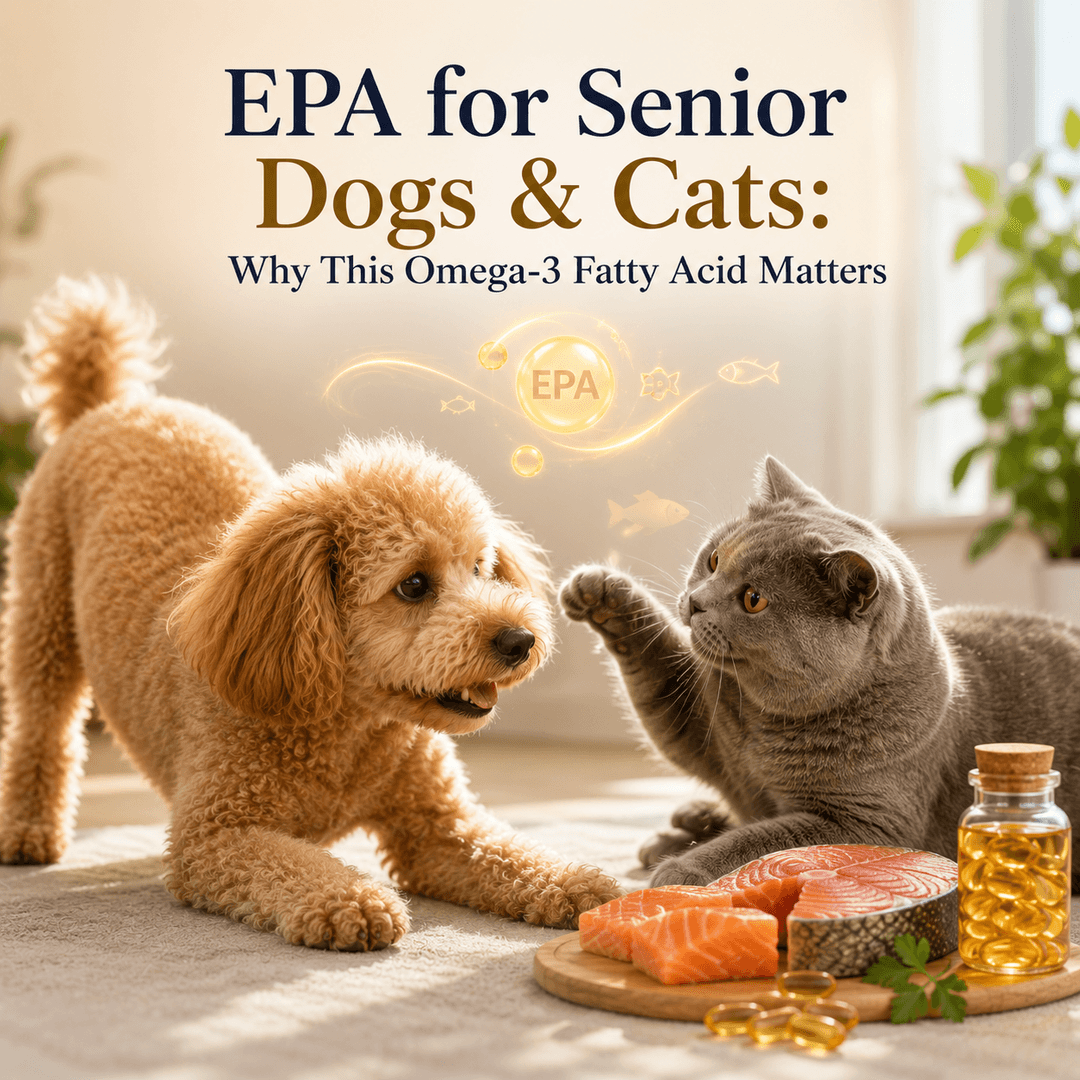
As dogs and cats age, many owners notice subtle changes. Their pets may be slower to get up, reluctant to climb stairs, less interested in walks or play, or seem stiff after resting.
While these changes are often blamed on “old age,” they are frequently linked to chronic inflammation and osteoarthritis.
One of the most evidence-based nutritional ingredients that veterinarians recommend for senior pets is EPA (Eicosapentaenoic Acid), an omega-3 fatty acid naturally found in fish oil.
What is EPA?
EPA is one of the two major omega-3 fatty acids found in marine fish oil, the other being DHA (Docosahexaenoic Acid).
While DHA is best known for supporting brain and eye health, EPA is the primary omega-3 responsible for reducing inflammation, making it especially beneficial for ageing pets with joint disease.
How Does EPA Help Joints?
In osteoarthritis, inflammation inside the joint causes pain, stiffness, and gradual breakdown of cartilage.
EPA works by reducing the production of inflammatory chemicals, such as prostaglandins and leukotrienes, while increasing compounds that help resolve inflammation naturally.
This means EPA doesn’t simply mask pain—it helps reduce the inflammatory process contributing to joint damage.
Benefits of EPA for Senior Dogs & Cats
Studies have shown that adequate EPA intake may help:
- Reduce joint inflammation
- Improve mobility and flexibility
- Decrease stiffness after rest
- Support healthier cartilage
- Improve comfort during daily activities
- Enhance quality of life in pets with osteoarthritis
Many owners report that after several weeks of supplementation, their pets become more willing to walk, climb stairs, jump onto furniture, or play again.
What Does the Research Say?
Scientific studies in dogs have consistently shown that diets enriched with EPA can improve mobility and reduce signs of osteoarthritis. Some dogs receiving higher levels of EPA have shown improved weight-bearing, increased activity, and a reduced need for pain medication under veterinary supervision.
Although fewer studies have been conducted in cats, evidence suggests omega-3 fatty acids may also benefit cats with osteoarthritis and chronic inflammatory conditions.
EPA is Part of a Multimodal Treatment Plan
As veterinarians, we rarely rely on a single treatment for arthritis.
Instead, we use a multimodal approach, combining several therapies to achieve the best outcome.
Depending on the individual pet, this may include:
- EPA-rich fish oil
- Curcumin
- Joint supplements
- Weight management
- Controlled exercise
- Physiotherapy and rehabilitation
- Laser therapy
- Prescription pain medications when necessary
By targeting inflammation from multiple angles, we can often improve mobility while reducing discomfort.
Starting Early Makes a Difference
Many owners wait until their pet is obviously limping before starting joint support.
However, by that stage, significant cartilage damage may already have occurred.
For dogs and cats aged 7 years and above, introducing EPA as part of a daily senior wellness programme may help support joint health before severe arthritis develops.
Early intervention is one of the most effective ways to maintain long-term mobility.
Choosing the Right Supplement
Not all fish oil supplements are created equal.
When selecting an omega-3 supplement, look for products that:
- Clearly state the amount of EPA and DHA, not just “fish oil”
- Are specifically formulated for pets
- Use purified fish oil to minimise contaminants such as heavy metals
- Provide an appropriate daily dose based on your pet’s body weight
Giving too little EPA may not provide meaningful benefits, while excessive amounts should only be used under veterinary guidance.
Is EPA Safe?
EPA is generally very safe for dogs and cats when given at recommended doses.
Some pets may experience mild digestive upset when first starting supplementation. Introducing it gradually and giving it with food usually helps.
Pets taking blood-thinning medications, those with bleeding disorders, or those scheduled for surgery should be assessed by a veterinarian before receiving high-dose omega-3 supplements.
The Bottom Line
Ageing joints don’t have to mean giving up the activities your pet loves.
EPA is one of the most scientifically supported nutritional ingredients for managing inflammation and supporting joint health in senior dogs and cats. While it is not a cure for arthritis, it can significantly improve comfort, mobility, and quality of life when combined with a comprehensive veterinary treatment plan.
As veterinarians, we believe the best approach is to stay ahead of arthritis rather than simply react to it. By incorporating EPA into a balanced senior wellness programme, along with regular health checks, weight management, and appropriate exercise, we can help our pets stay active, comfortable, and enjoy their golden years for as long as possible.
Healthy joints mean more walks, more play, and more precious moments together.