

Curcumin for Senior Dogs & Cats: A Natural Ally Against Inflammation

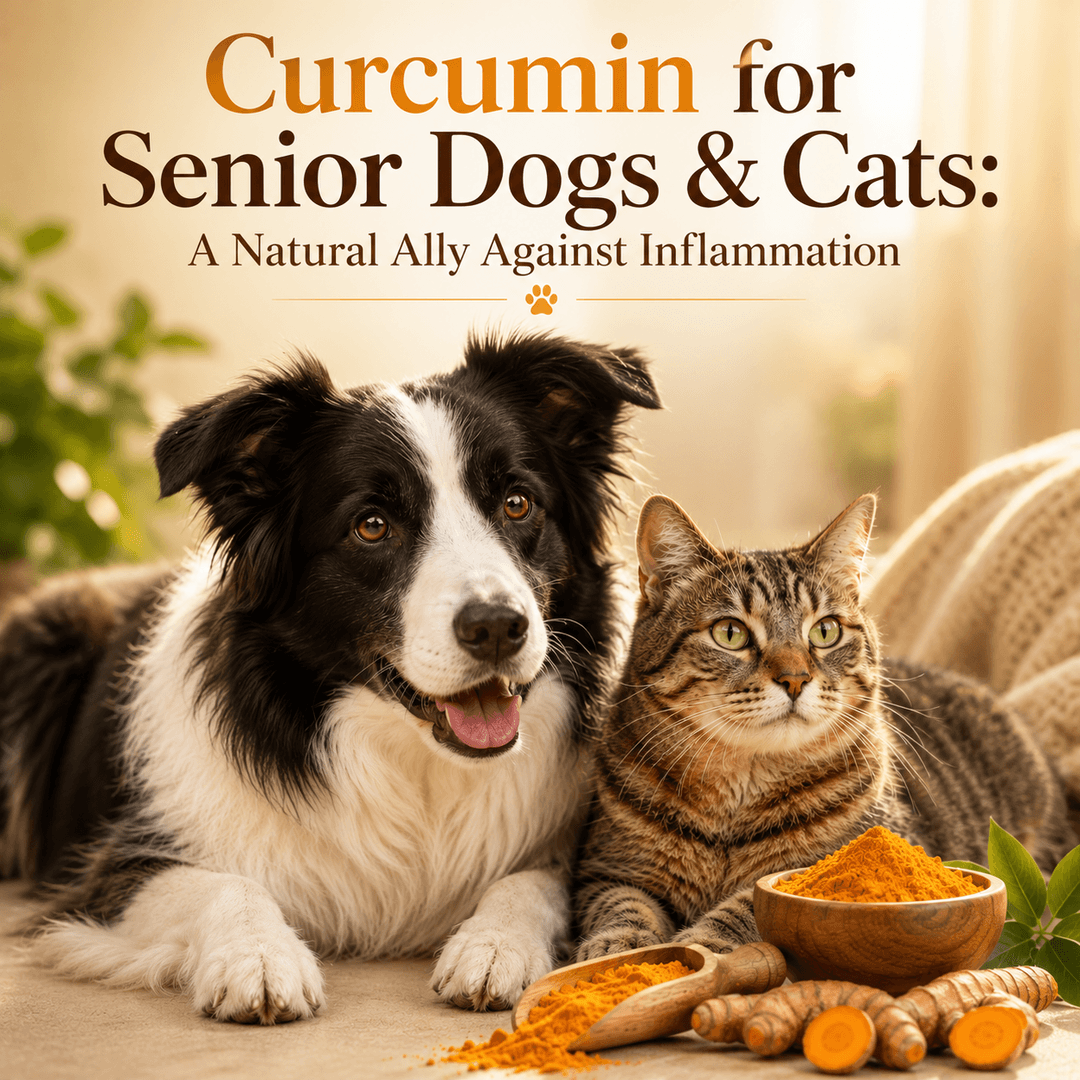
As our pets grow older, it’s common to notice that they become slower, hesitate before climbing stairs, struggle to jump onto furniture, or seem less interested in playing. Many owners assume this is simply “old age,” but in reality, chronic inflammation is often the hidden culprit behind many age-related diseases.
As a veterinarian, one supplement I frequently recommend as part of a comprehensive senior care plan is curcumin.
While it is not a miracle cure, growing scientific evidence suggests that curcumin can help improve quality of life when used appropriately alongside other veterinary treatments.
What is Curcumin?
Curcumin is the main active compound found in turmeric, a spice widely used in Asian cooking. It has been extensively studied for its anti-inflammatory, antioxidant, and immune-modulating properties.
Unlike painkillers that mainly mask pain, curcumin works by helping to reduce the inflammatory processes that contribute to long-term tissue damage.
Why Is Inflammation So Important?
Inflammation is the body’s natural defence mechanism. However, when low-grade inflammation persists for months or years, it can contribute to many diseases commonly seen in senior pets, including:
- Osteoarthritis
- Degenerative joint disease
- Cognitive decline
- Chronic kidney disease
- Heart disease
- Certain cancers
Reducing chronic inflammation may therefore help support healthier ageing and improve overall wellbeing.
How Can Curcumin Help?
Research suggests curcumin may help:
- Reduce joint inflammation
- Improve mobility and flexibility
- Ease stiffness after resting
- Support cartilage health
- Reduce oxidative stress
- Support a healthy immune response
Many owners report that after several weeks of consistent supplementation, their pets become more active, are happier to go for walks, and appear more comfortable during daily activities.
Can Curcumin Help Reduce Cancer Risk?
One of the most exciting areas of curcumin research is its potential role in cancer prevention and supportive cancer care.
Laboratory studies have shown that curcumin may reduce inflammation, neutralise harmful free radicals, slow the growth of certain cancer cells, and encourage abnormal cells to undergo natural cell death. Studies using canine cancer cells have produced encouraging results.
However, it is important to understand what this means in real life.
At present, there is no strong clinical evidence proving that curcumin alone can prevent cancer or cure cancer in dogs or cats.
What we do know is that chronic inflammation is one of the factors involved in many chronic diseases, including some cancers. By helping reduce inflammation and oxidative stress, curcumin may contribute to healthier ageing and may support the body’s natural protective mechanisms.
How Veterinarians Use Curcumin?
In veterinary practice, curcumin is not used as a replacement for medical treatment. Instead, we often use it as an adjunctive therapy—meaning it complements conventional medicine to provide more comprehensive care.
Depending on the individual patient, curcumin may be incorporated into treatment plans for:
- Osteoarthritis
- Hip and elbow dysplasia
- Chronic joint pain
- Senior wellness programmes
- Recovery following orthopaedic surgery
- Certain cancer patients receiving surgery, chemotherapy, or radiation therapy (where appropriate and under veterinary supervision)
By combining conventional medicine with evidence-based nutritional support, our goal is to improve comfort, mobility, and quality of life while potentially reducing long-term inflammation.
Not Just for Dogs—Cats Can Benefit Too!
Although most research has focused on dogs, senior cats also experience chronic inflammation as they age.
Cats commonly develop conditions such as:
- Osteoarthritis (often hidden because cats disguise pain well)
- Chronic kidney disease
- Age-related cognitive decline
- Reduced mobility
A veterinary-formulated curcumin supplement may therefore play a supportive role in maintaining comfort and healthy ageing in senior cats as well.
Because cats have unique nutritional requirements, owners should always choose supplements specifically formulated for pets rather than human products.
Making Curcumin Part of a Senior Wellness Plan
One of the biggest changes in modern veterinary medicine is that we no longer wait until pets become seriously ill before intervening. Instead, we aim to support healthy ageing through preventive care.
For many senior dogs and cats—especially those aged 7 years and above—a daily senior supplement containing well-absorbed curcumin can become part of their long-term wellness routine.
When combined with:
- A balanced diet
- Weight management
- Regular exercise
- Routine health screening
- Dental care
- Omega-3 fatty acids
- Other veterinarian-recommended supplements
Curcumin may help support healthier joints, reduce inflammation, and promote a better quality of life throughout the senior years.
Not All Curcumin Supplements Are Equal
One important point many owners don’t realise is that curcumin is naturally poorly absorbed.
Simply sprinkling turmeric powder over your pet’s food is unlikely to provide enough active curcumin to produce meaningful health benefits.
Veterinary-formulated supplements often use enhanced delivery systems that significantly improve absorption, ensuring your pet receives a consistent and effective amount.
The Bottom Line
There is no single supplement that can stop ageing.
However, ageing well is possible.
As veterinarians, our focus is not only on helping pets live longer but also on helping them live better. Curcumin is one of several evidence-based nutritional tools that can support this goal when incorporated into a complete senior healthcare plan.
If your dog or cat is entering their senior years, speak to your veterinarian about whether a high-quality curcumin supplement may be suitable for them.
Healthy ageing isn’t about adding years to life—it’s about adding life to those years.