

Why Is My Cat Losing Weight? Even Though They’re Still Eating

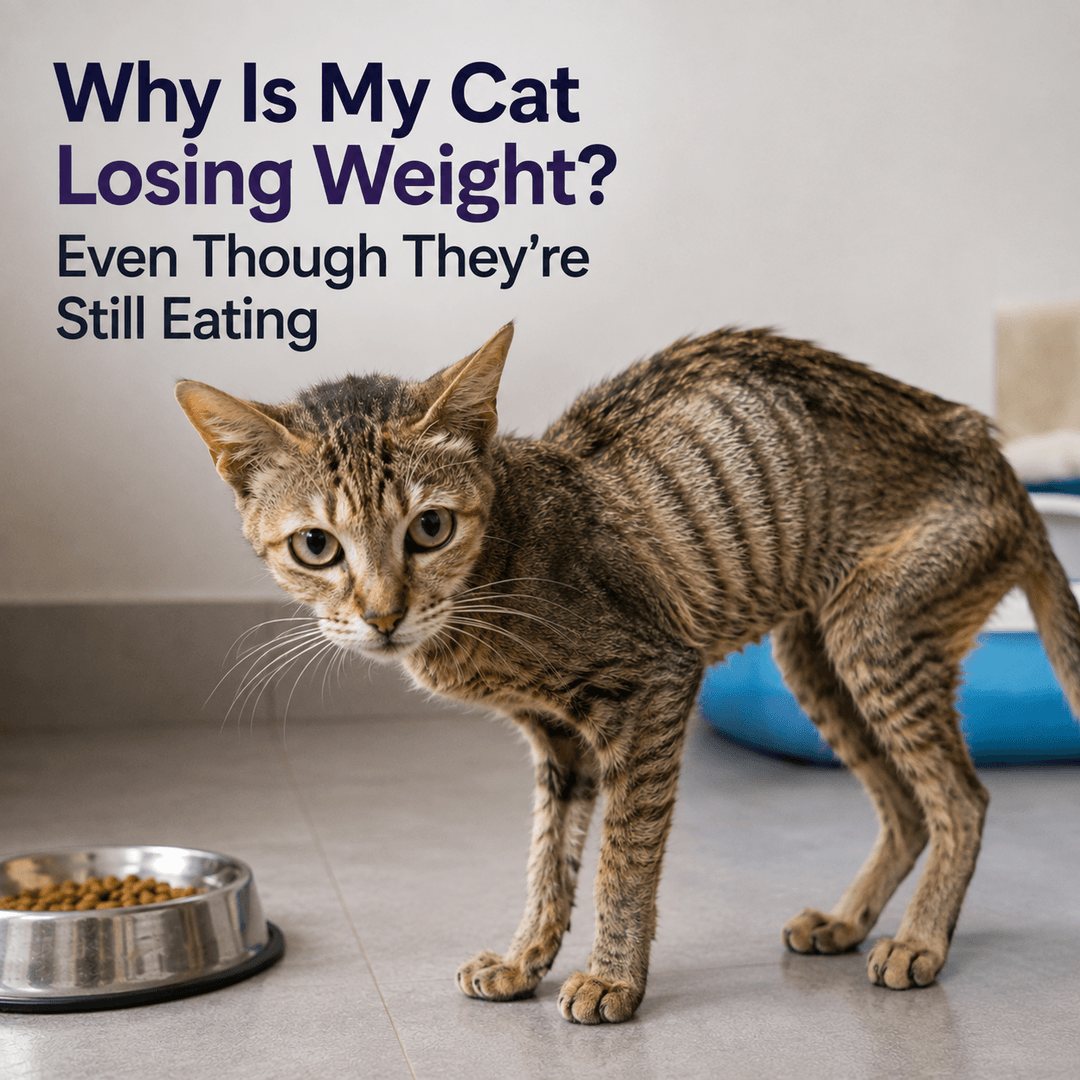
Many cat owners tell me, “Doctor, she’s eating quite well… but she just keeps getting thinner.”
It’s easy to think this is simply part of getting older. After all, senior cats do become less muscular with age.
However, weight loss is never something we should ignore, especially when your cat still has a good appetite.
In many cases, it is one of the earliest signs that something is happening inside the body.
What Could Be Causing Weight Loss?
There are many possible reasons why a cat loses weight, including:
- Hyperthyroidism (an overactive thyroid gland)
- Chronic kidney disease
- Diabetes mellitus
- Digestive disorders
- Dental disease
- Intestinal parasites
- Certain cancers
The challenge is that many of these conditions look very similar in the early stages. That’s why a physical examination, together with blood and urine tests, is often needed to find the real cause.
What Should Owners Watch For?
Besides losing weight, you may notice small changes at home, such as:
- Drinking more water
- Eating more than usual but still becoming thinner
- Sleeping more
- Becoming less interested in playing
- A dull or unkempt coat
- Vomiting occasionally
- Bad breath
- Changes in litter tray habits
These changes often develop gradually. Because we see our pets every day, they can be surprisingly easy to miss.
A simple habit that many owners find helpful is weighing their cat once a month. Even a small but consistent drop in weight can provide an important clue that something isn’t right.
Can It Just Be Old Age?
Growing older does bring changes, but losing weight should never be accepted as a normal part of ageing.
Many senior cats live happy, healthy lives while maintaining a stable body weight.
When weight loss occurs, it’s our job as veterinarians to find out why—not simply blame it on age.
When Should You Arrange a Check-Up?
It’s a good idea to book an appointment if your cat:
- Continues losing weight over several weeks.
- Is eating more but becoming thinner.
- Drinks noticeably more water.
- Vomits repeatedly.
- Has poor appetite.
- Is over 10 years of age and hasn’t had a recent health screening.
Many age-related diseases can be managed very successfully when diagnosed early.
Dr. Lee’s Clinical Pearl
After many years in practice, one thing still surprises me.
Owners often tell me, “I didn’t realise she had lost so much weight until I picked her up.”
Cats are incredibly good at hiding illness. Sometimes the first clue isn’t what you see—it’s what you feel.
If your cat suddenly feels lighter than before, even though they seem quite normal, trust that observation. It’s often the reason we discover kidney disease, hyperthyroidism or diabetes before they become much more serious.
Your hands can sometimes detect what your eyes haven’t noticed yet.
Final Thoughts
Weight loss is your cat’s way of telling you that something has changed.
It doesn’t always mean something serious, but it does mean your cat deserves a closer look.
Early diagnosis gives us more treatment options, helps your cat stay comfortable, and often leads to much better long-term outcomes.
Sometimes, the smallest changes at home become the biggest clues in the consultation room.