

Ringworm in Cats: What It Is and How to Manage It Safely

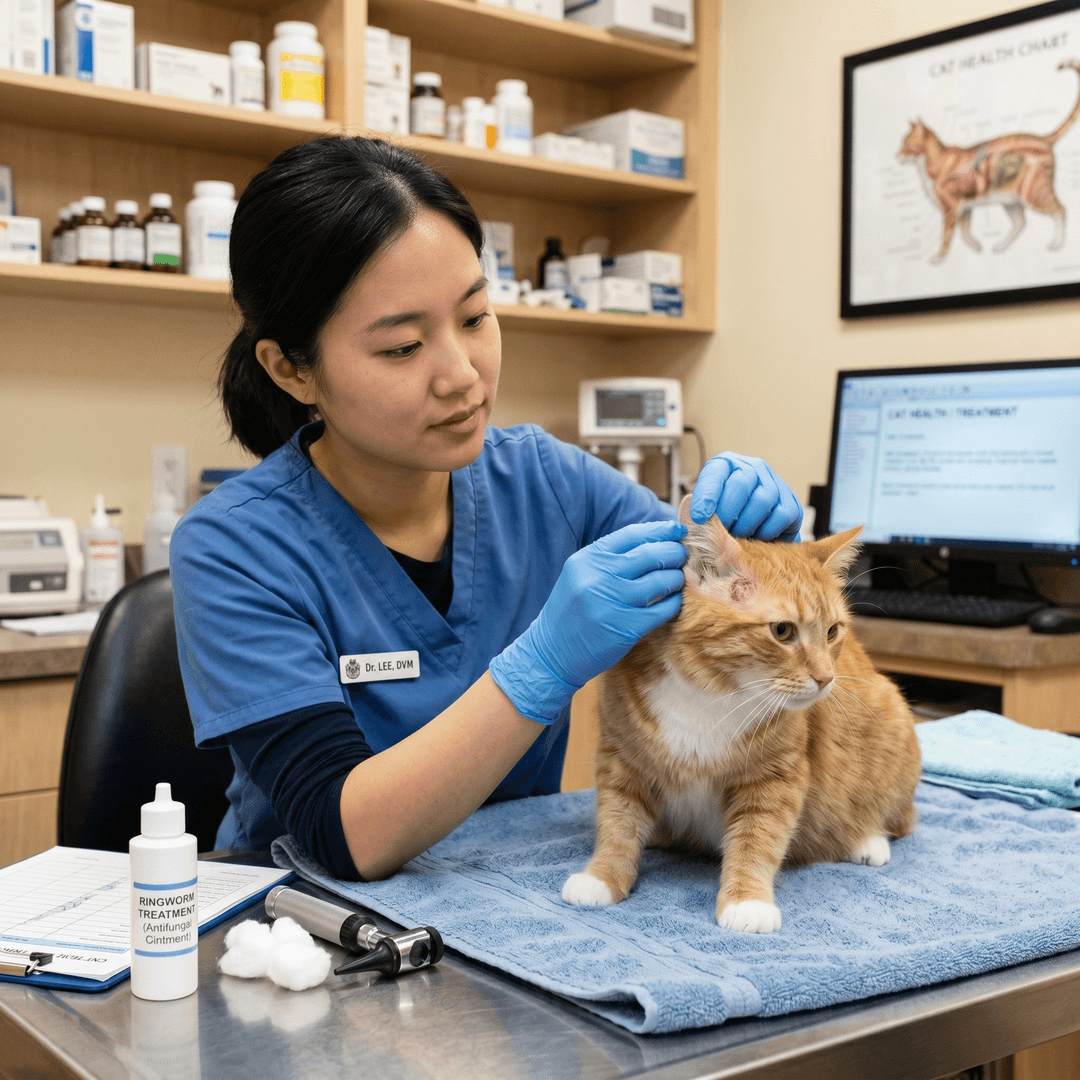
Despite the name, ringworm is not a worm. It is a fungal infection of the skin, hair, and sometimes claws. As veterinarians, we commonly see ringworm in kittens, multi-cat households, and stressed or immunocompromised cats.
The important thing to know is:
👉 Ringworm is contagious—to other pets and even to humans.
With early recognition and proper treatment, most cats recover well.
What Does Ringworm Look Like?
Ringworm lesions can vary, but common signs include:
- Circular patches of hair loss
- Scaly or crusty skin
- Redness or mild inflammation
- Broken or brittle hair
Common areas affected:
- Face and ears
- Paws
- Tail
- Body
Some cats may not itch at all, while others may scratch mildly.
How Do Cats Get Ringworm?
Ringworm spreads through fungal spores, which are very hardy in the environment.
Common sources include:
- Direct contact with an infected animal
- Contaminated objects (bedding, brushes, cages)
- Environment (spores can survive for months)
Kittens and young cats are especially at risk because their immune systems are still developing.
Can Humans Get Ringworm from Cats?
Yes — ringworm is a zoonotic disease, meaning it can spread from animals to humans.
In people, it usually appears as:
Red, circular, itchy skin lesions
Children, elderly individuals, and those with weaker immune systems are more susceptible.
Good hygiene and early treatment of the cat can greatly reduce this risk.
How Veterinarians Diagnose Ringworm
Diagnosis is important because other skin conditions can look similar.
Veterinarians may use:
- Wood’s lamp examination
Some strains glow under a special ultraviolet light. - Fungal culture
This is one of the most reliable methods but takes time. - Microscopic examination
Hair samples may be examined for fungal elements.
How Is Ringworm Treated?
Treatment usually involves a combination approach.
Topical treatment
- Antiseptic spray or wipes
- Medicated shampoos
- Antifungal creams
Oral medication
- Prescribed antifungal drugs for more widespread cases
Environmental cleaning
- Vacuum regularly
- Wash bedding and fabrics
- Disinfect surfaces
Treatment typically continues for several weeks, even after the skin looks better, to ensure the infection is fully cleared.
Managing Ringworm at Home
To reduce spread:
- Isolate the infected cat if possible
- Wash hands after handling
- Avoid sharing grooming tools between pets
- Clean the environment frequently
Consistency is key—ringworm can recur if treatment is stopped too early.
When Should You See a Veterinarian?
Seek veterinary advice if:
- You notice patchy hair loss or skin lesions
- The condition is spreading
- Other pets or family members develop similar lesions
Early treatment helps reduce spread and shorten recovery time.
A Veterinarian’s Final Advice
Ringworm can be frustrating because it spreads easily and takes time to treat. However, it is manageable with the right approach.
The most important steps are:
👉 Early diagnosis
👉 Consistent treatment
👉 Good hygiene and environmental control
With patience and proper care, most cats recover fully and return to having healthy skin and coat again. 🐱