

Alopecia X in Pomeranians

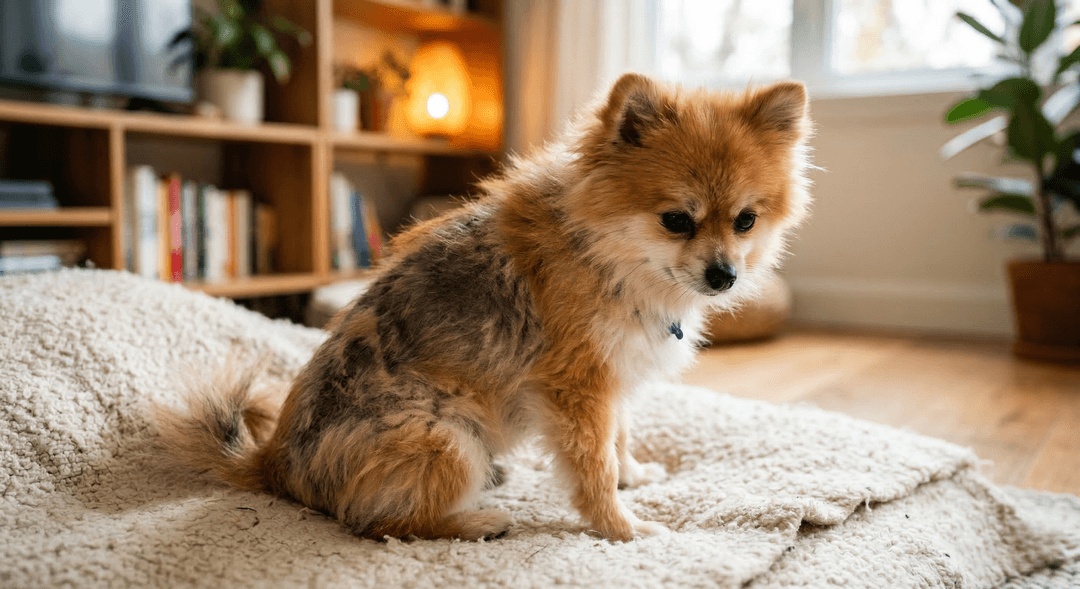
Alopecia X in Pomeranians: Why Is My Dog Losing Fur?
Many Pomeranian owners become worried when their fluffy dog slowly starts losing its beautiful coat. At first, it may look like normal shedding, but over time the fur becomes thinner and bald patches may appear on the body.
As veterinarians, one condition we commonly consider in this situation is Alopecia X, sometimes referred to as “Black Skin Disease.” It is most often seen in Pomeranians and a few other fluffy breeds.
While the condition usually does not cause pain or itching, it can be very concerning for owners because of the dramatic change in appearance.
What Is Alopecia X?
Alopecia simply means hair loss.
In Alopecia X, the dog’s hair follicles stop producing normal hair growth even though the skin itself is usually healthy.
Over time, the affected areas may develop:
- Hair thinning
- Symmetrical hair loss
- Darkened skin (hyperpigmentation)
Despite the significant hair loss, most dogs with Alopecia X remain otherwise healthy and comfortable.
Why Are Pomeranians More Affected?
Certain breeds appear to be genetically predisposed. These include:
- Pomeranians
- Chow Chows
- Keeshonds
- Samoyeds
- Alaskan Malamutes
Among these breeds, Pomeranians are one of the most commonly affected.
The exact cause of Alopecia X is still not fully understood. However, many experts believe it is related to hormonal imbalance affecting the hair growth cycle.
What Does Alopecia X Look Like?
Hair loss usually develops gradually.
Common patterns include:
- Hair loss starting at the back of the thighs or tail
- Owners may notice the tail looking like a “rat tail”
- Hair thinning on the body and trunk
- Hair loss around the neck or collar area
- Symmetrical bald patches
The head and legs often remain fluffy, which can make the body look disproportionately bald.
Another common feature is darkening of the exposed skin, giving rise to the nickname “black skin disease.”
Important: Other Diseases Can Look Similar
Before diagnosing Alopecia X, veterinarians must rule out other medical conditions that also cause hair loss.
These include:
- Hormonal diseases such as Cushing’s disease
- Hypothyroidism
- Parasite infections
- Fungal infections (ringworm)
- Skin allergies
Because of this, diagnosis often requires:
- Physical examination
- Skin tests
- Blood tests
- Sometimes hormone testing
Alopecia X is usually considered a diagnosis of exclusion, meaning other causes must be ruled out first.
Is Alopecia X Dangerous?
The good news is that Alopecia X is mainly a cosmetic condition.
Most dogs:
- Are not itchy
- Do not feel pain
- Remain active and healthy
However, the exposed skin may sometimes become dry or more sensitive to sun exposure.
Treatment Options
Treatment can be challenging because not every dog responds the same way.
Possible management options include:
- Neutering (spaying or castration)
In some dogs, especially younger ones, coat regrowth occurs after sterilization. - Melatonin supplements
Melatonin may help regulate the hair growth cycle in some cases. - Topical treatments
Certain medicated shampoos or skin care products may improve skin condition. - Monitoring without treatment
Since the condition is mostly cosmetic, some owners choose not to pursue aggressive treatment.
It is important to discuss options with your veterinarian, as treatment plans are individualized for each dog.
Can the Hair Grow Back?
Some dogs experience partial or full coat regrowth, especially with treatment.
However, others may have persistent hair loss, and the coat may not fully return.
Interestingly, some Pomeranians experience spontaneous hair regrowth months or even years later.
A Veterinarian’s Final Advice
Pomeranians are loved for their beautiful, fluffy coats, so hair loss can be distressing for owners. The important thing to remember is that Alopecia X usually does not affect the dog’s overall health or happiness.
If you notice unusual hair loss in your Pomeranian, it is always best to consult a veterinarian. Proper diagnosis ensures that more serious hormonal or skin diseases are ruled out first.
With proper care and monitoring, most dogs with Alopecia X can continue to live happy, active lives—even if their hairstyle changes a little. 🐶