

Clean small wound with antiseptic

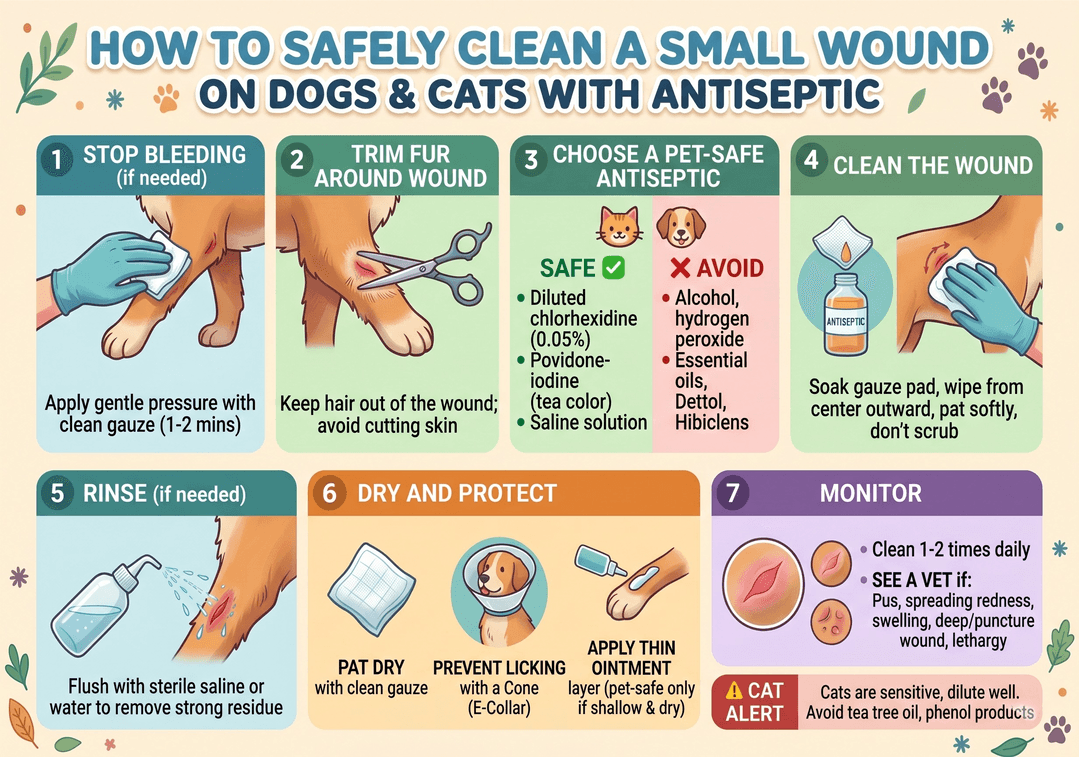
Here’s a step-by-step guide to safely clean a small wound with antiseptic in dogs and cats:
1. Stop bleeding (if needed)
Apply gentle pressure with a clean gauze or cloth for 1–2 minutes.
2. Trim fur around the wound
Use blunt-tipped scissors to keep hair from sticking to the wound. Avoid cutting the skin.
3. Choose a pet-safe antiseptic
✅ Safe options:
- Diluted chlorhexidine (0.05%) – best all-around
- Povidone-iodine (diluted to tea color)
- Saline solution (non-stinging, for very minor wounds)
❌ Avoid:
- Alcohol, hydrogen peroxide – damage tissue and delay healing
- Essential oils, Dettol, Hibiclens (undiluted) – toxic or irritating
4. Clean the wound
- Soak a gauze pad in your chosen antiseptic.
- Gently wipe from the center outward, one pass per gauze.
- Don’t scrub – pat or wipe softly.
5. Rinse (if needed)
Flush with sterile saline or clean water to remove antiseptic residue if the product is strong.
6. Dry and protect
- Pat dry with clean gauze.
- Prevent licking with an Elizabethan collar (cone) or a recovery suit.
- Apply a very thin layer of pet-safe antibiotic ointment (e.g., triple antibiotic without pain reliever) only if the wound is shallow and dry.
7. Monitor
Clean 1–2 times daily. Stop antiseptic once the wound is pink and clean. See a vet if you see:
- Pus, redness spreading, swelling, odor
- Wound deeper than ¼ inch (0.5 cm)
- Puncture wound (especially cat bite)
- No healing in 2–3 days
- Your pet is lethargic, feverish, or in pain
🚨 Cats are sensitive to many antiseptics – dilute chlorhexidine or iodine well. Never use tea tree oil or phenol-based products.