

Common Cat Skin Diseases

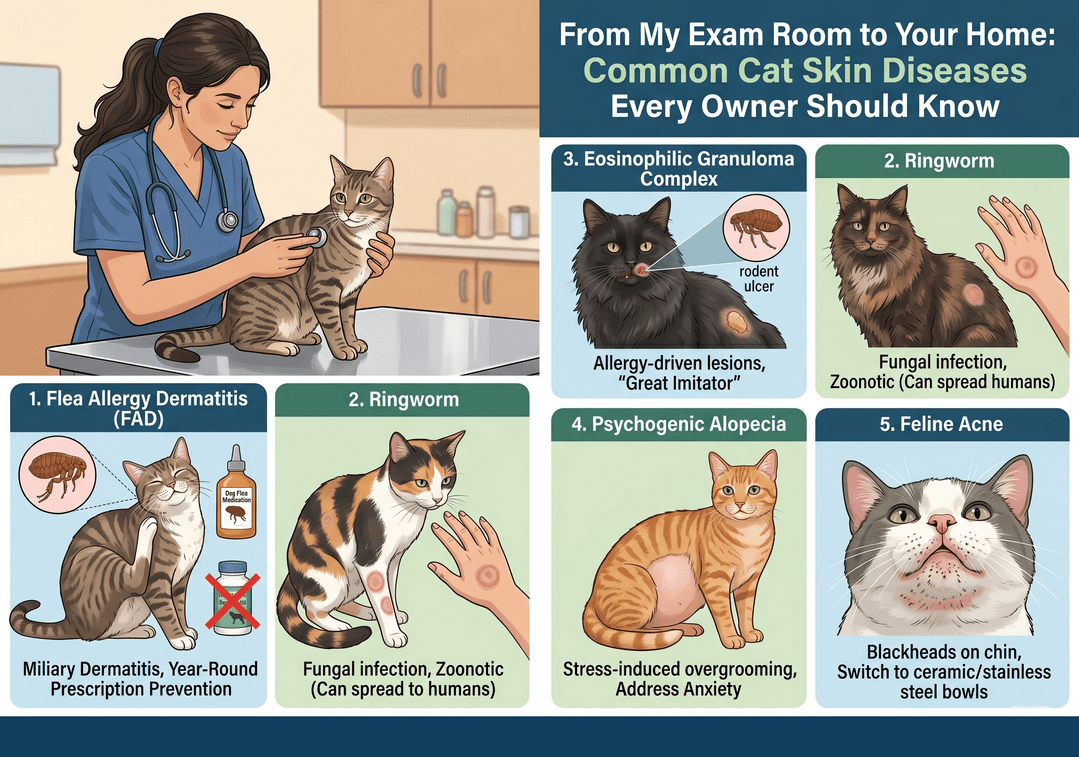
From My Exam Room to Your Home: Common Cat Skin Diseases Every Owner Should Know
By Dr. Lee Wai Wai (DVM)
As a veterinarian, few things break my heart more than seeing a cat suffer silently with itchy, painful skin. Unlike dogs, cats are masters of hiding discomfort. By the time you notice hair loss or scabs, the problem has often been going on for weeks.
In my daily practice, skin issues are one of the top three reasons cat owners come through our doors. The good news? Most are treatable – but only with an accurate diagnosis.
Here are the most common feline skin diseases I diagnose, and what you can do about them.
1. Flea Allergy Dermatitis (FAD) – The #1 Culprit
What I see in the clinic: A cat with tiny scabs (we call it “miliary dermatitis”) along the back, neck, and tail base. The owner says, “But I’ve never seen a flea!”
The truth: You don’t need an infestation. One single flea bite can trigger a severe allergic reaction that lasts weeks. Cats are fastidious groomers – they often swallow the evidence before you see it.
My advice: Year-round prescription flea prevention (not over-the-counter products – many are ineffective or dangerous). And please, never use dog flea medication on your cat. Permethrin toxicity is a tragedy I see far too often.
2. Ringworm – Not a Worm, But a Fungus
What I see in the clinic: Circular patches of hair loss, scaly skin, broken stubble hairs. Sometimes the only sign is a fine dandruff. Kittens and long-haired cats are especially vulnerable.
Why it matters: This is zoonotic – you and your family can catch it. I’ve treated entire households after one stray kitten came inside.
What works: Topical therapy (lime sulfur dips or medicated shampoos) combined with oral antifungals. Environmental decontamination is essential – spores live for months.
3. Eosinophilic Granuloma Complex – The Great Imitator
What I see in the clinic: One of three classic patterns –
- A “rodent ulcer” (painless red sore on the upper lip)
- A raised, yellowish line on the back of the thigh
- Moist, red, itchy plaques on the belly
Underlying cause: Almost always allergies – fleas, food, or environmental. Once we treat the allergy, these lesions melt away.
4. Psychogenic Alopecia – When Overgrooming Is a Cry for Help
What I see in the clinic: A perfectly healthy-looking cat with a bald belly, inner legs, or back. The skin is not red or scabby – just naked. Owners often say, “She’s always grooming, but I thought that was normal.”
The driver: Stress, boredom, or anxiety. Changes like a new pet, moving homes, or even a stray cat outside the window can trigger this compulsive behavior.
My approach: Rule out medical causes (allergies, pain) first. Then address the stress – environmental enrichment, pheromone diffusers (Feliway), and sometimes anti-anxiety medication.
5. Feline Acne – More Than a Cosmetic Issue
What I see in the clinic: Blackheads (comedones) on the chin and lower lip. Mild cases look like dirt. Severe cases become swollen, bleeding, and infected.
Common triggers: Plastic food bowls (they trap bacteria), poor grooming, stress.
My fix: Switch to ceramic or stainless steel bowls, wash them daily, and gently wipe your cat’s chin after meals. For stubborn cases, medicated wipes or prescription treatments help.
When Should You Bring Your Cat In?
Please don’t wait for the skin to bleed or the hair to fall out in clumps. Book an appointment if you notice:
- Persistent scratching, grooming, or head shaking
- Scabs, bumps, or crusts anywhere on the body
- Hair loss (especially symmetrical or patchy)
- Redness, swelling, or black debris in the ears
- A sore on the lip or chin that doesn’t heal in a few days
A Final Word From My Heart
Online forums and “home remedies” are not your cat’s friend. Coconut oil, essential oils, and human creams can make things worse – some are toxic. Even over-the-counter flea products for cats can cause seizures or death if misused.
As your veterinarian, I’m here to help you get to the root cause – not just suppress symptoms. A simple skin scrape, fungal culture, or allergy trial can change your cat’s quality of life dramatically.