

How your dog’s hygiene affects their skin health

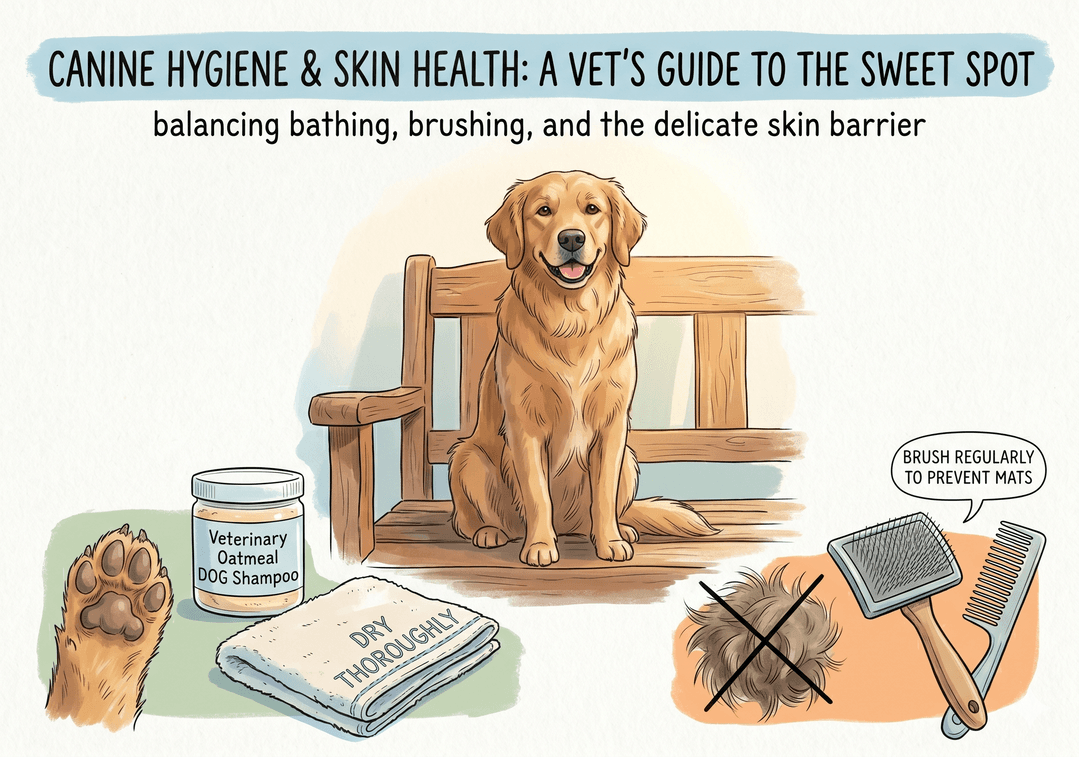
Bathing, Brushing, and Bothersome Skin: How Your Dog’s Hygiene Affects Their Skin Health
By Dr. Lee Wai Wai (DVM)
One of the most common questions I hear in my exam room is: “How often should I bathe my dog?”
The answer isn’t one-size-fits-all. And here’s what surprises most owners: both too little hygiene AND too much hygiene can cause skin problems.
As a veterinarian, I see the full spectrum – from dogs with matted, infected coats to dogs whose owners scrub them weekly with harsh shampoos, stripping away natural oils.
Let me walk you through the connection between hygiene and skin health, and give you practical guidelines that actually work.
The Skin Barrier – Your Dog’s First Defense
Your dog’s skin is not just fur and fluff. It’s a living organ with a protective layer of natural oils, beneficial bacteria, and a slightly acidic pH (different from ours). This “microbiome” keeps infections away.
When hygiene habits disrupt this barrier, problems start.
Common Hygiene-Related Skin Issues I See in Practice:
1. Matting and “Hidden Dermatitis”
What I see: A dog with thick, tight mats close to the skin. The owner doesn’t realize that underneath, the skin is red, moist, and infected.
Why it happens: Mats trap moisture, dirt, and bacteria. They also pull on the skin, causing pain and inflammation. Severe matting can even cut off circulation to a limb.
Common culprits: Double-coated breeds (Huskies, Goldens) and curly-coated breeds (Poodles, Doodles) whose owners skip brushing for weeks.
My advice: Brush your dog at least 2-3 times per week. For heavy shedders or curly coats, daily brushing is best. If mats are already tight, don’t cut them with scissors (I’ve seen terrible lacerations) – come see us or a professional groomer.
2. Over-Bathing – The Silent Stripper
What I see: A dog with dry, flaky, itchy skin but no parasites or allergies. The owner says proudly, “I bathe him every week with anti-itch shampoo.”
The irony: Over-bathing removes natural oils, causing dryness that leads to more itching, which leads to more bathing – a vicious cycle.
My rule of thumb:
- Normal healthy dogs: bathe every 6-8 weeks (or less)
- Dogs with skin conditions: follow my specific prescription (often medicated baths every 1-2 weeks, but with moisturizing follow-ups)
- Never use human shampoos – our pH is different and will damage dog skin
What to use: Veterinary-approved, pH-balanced dog shampoos. For sensitive skin, oatmeal or aloe-based formulas.
3. Moisture Dermatitis (“Hot Spots” and “Fold Dermatitis”)
What I see: A dog with a wet, red, oozing sore that appeared overnight – especially common in Labradors, Goldens, and any dog who swims or gets rained on.
Why it happens: Moisture trapped against the skin (from swimming, rain, drool, or urine) causes bacteria to multiply rapidly. The dog licks and makes it worse.
Prevention:
- After swimming or baths, dry your dog thoroughly – especially under the collar, between toes, and in skin folds
- Use a towel followed by a blow dryer on low/cool setting
- For drooly breeds (Boxers, Mastiffs), wipe face folds daily
Skin fold infections (in Bulldogs, Shar-Peis, Pugs): Clean wrinkles daily with veterinary wipes and keep completely dry.
4. Ear Infections – A Hygiene Issue
What I see: A dog shaking its head, scratching ears, with brown or yeasty debris inside. Floppy-eared breeds (Cocker Spaniels, Basset Hounds) are especially prone.
The hygiene link: Excess moisture and wax build-up inside the ear canal create the perfect environment for yeast and bacteria.
My hygiene protocol:
- Clean ears weekly with a veterinary ear cleaner (never cotton swabs – they push debris deeper)
- After swimming or bathing, use a drying ear solution
- Pluck excessive hair inside ear canals (your groomer or vet can do this)
5. Contact Dermatitis from Grooming Products
What I see: Red bumps, hives, or hair loss appearing after a grooming appointment or a new shampoo.
Common irritants: Harsh chemicals, artificial fragrances, “flea and tick” shampoos (often too strong), or essential oils (many are toxic to dogs).
My advice: Stick to veterinary-recommended or hypoallergenic products. If you use a groomer, ask what products they use – and let them know if your dog has sensitive skin.
6. Dirty Bedding and Environmental Hygiene
What I see: A dog with recurrent skin infections that clear up with antibiotics but return within weeks.
The hidden cause: The dog’s bed, crate mats, or favorite couch cushion is harboring bacteria and yeast. You treat the dog, but they re-infect themselves every night.
Simple fix: Wash your dog’s bedding weekly in hot water with a pet-safe, fragrance-free detergent. Dry thoroughly on high heat/ direct sunlight.
A Final Word From My Practice
I’ve seen dogs who never get bathed develop severe yeast infections. And I’ve seen dogs bathed weekly develop cracked, bleeding skin. The sweet spot is consistent, gentle, and appropriate hygiene for your individual dog.
Your dog doesn’t need to be squeaky clean. They need a healthy, intact skin barrier. Let’s work together to find that balance.