

Perineal Hernia in Dogs

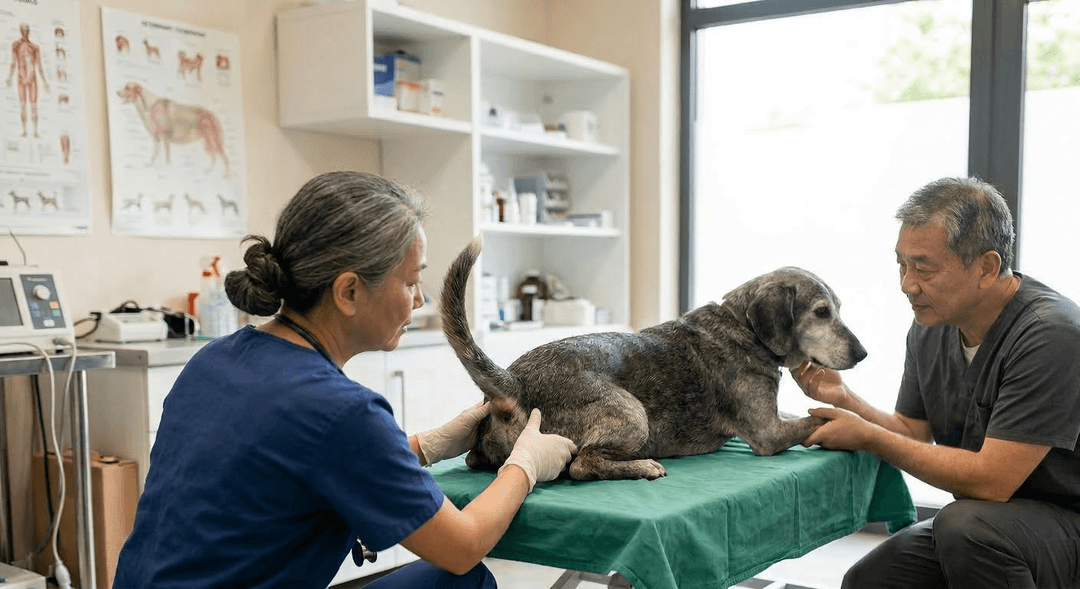
Perineal Hernia in Dogs: A Common Problem in Older Male Dogs
Perineal hernia is a condition veterinarians most commonly see in older, unneutered male dogs. It often develops slowly, and many owners first notice a soft swelling beside the dog’s anus.
Although it may look mild at the beginning, perineal hernia can become a serious condition if left untreated, especially when internal organs become trapped in the hernia.
Understanding the signs early can help owners seek treatment before complications develop.
What Is a Perineal Hernia?
A perineal hernia occurs when the muscles around the pelvic area weaken or separate.
These muscles normally support the rectum and keep the abdominal organs in their proper position. When they weaken, organs such as fat, the rectum, the bladder, or even parts of the intestine can push through the weakened area and form a bulge near the anus.
This bulge is what owners usually notice first.
Which Dogs Are Most at Risk?
Perineal hernia occurs most frequently in:
- Older male dogs
- Unneutered dogs
- Dogs over 7 years of age
Certain breeds may also be more commonly affected, including:
- Boston Terriers
- Boxers
- Welsh Corgis
- Pekingese
- Mixed-breed medium to small dogs
Female dogs rarely develop this condition.
Why Does It Happen?
The exact cause is not always clear, but several factors are believed to contribute:
- Hormonal influence
Unneutered male dogs may develop prostate enlargement, which can cause straining during defecation. - Chronic straining
Conditions such as constipation or prostate disease increase pressure on the pelvic muscles. - Age-related muscle weakness
As dogs age, the muscles supporting the rectum can gradually weaken.
Over time, these factors allow the tissues to separate and form a hernia.
Signs Owners May Notice
The symptoms can vary depending on the severity of the hernia.
Common signs include:
- Swelling next to the anus
The swelling may appear on one side or both sides. - Difficulty passing stool
Constipation or straining - Ribbon-shaped stool
Scooting or licking the area
Some dogs may also appear uncomfortable when sitting.
A Serious Complication: Bladder Entrapment
In more severe cases, the urinary bladder may become trapped inside the hernia.
This is a medical emergency.
Signs may include:
- Inability to urinate
- Repeated straining to urinate
- Severe discomfort
- Lethargy
If this happens, immediate veterinary treatment is required.
How Is Perineal Hernia Diagnosed?
Veterinarians usually diagnose this condition through:
- Physical examination
The swelling around the anus is often noticeable during examination. - Rectal examination
This helps evaluate the muscle weakness and confirm the hernia. - Imaging tests
X-rays or ultrasound may be used to check whether organs such as the bladder are involved.
Treatment Options
The most effective treatment for perineal hernia is surgery.
During surgery, the veterinarian repairs the weakened muscles and returns displaced tissues to their normal position.
In many cases, neutering is performed at the same time, as this reduces the risk of recurrence by addressing hormonal influences and prostate enlargement.
Supportive treatments before surgery may include:
- Stool softeners
- Special diets
- Managing constipation
However, these measures do not permanently fix the hernia.
Recovery After Surgery
Most dogs recover well after surgical repair.
During recovery, veterinarians may recommend:
- Restricted activity
- Soft food or stool softeners
- Preventing excessive straining
Follow-up visits are important to ensure proper healing.
A Veterinarian’s Final Advice
Perineal hernia is a condition that often starts subtly but can become serious over time.
If you notice a swelling near your dog’s anus or signs of difficulty passing stool, it is best to have your dog examined early.
Early treatment usually leads to better outcomes and fewer complications.
For many male dogs, neutering at the time of surgery also helps prevent the problem from returning, allowing them to return to a comfortable and active life. 🐶