

Cat Osteoarthritis: The Silent Cause of Pain in Older Cats

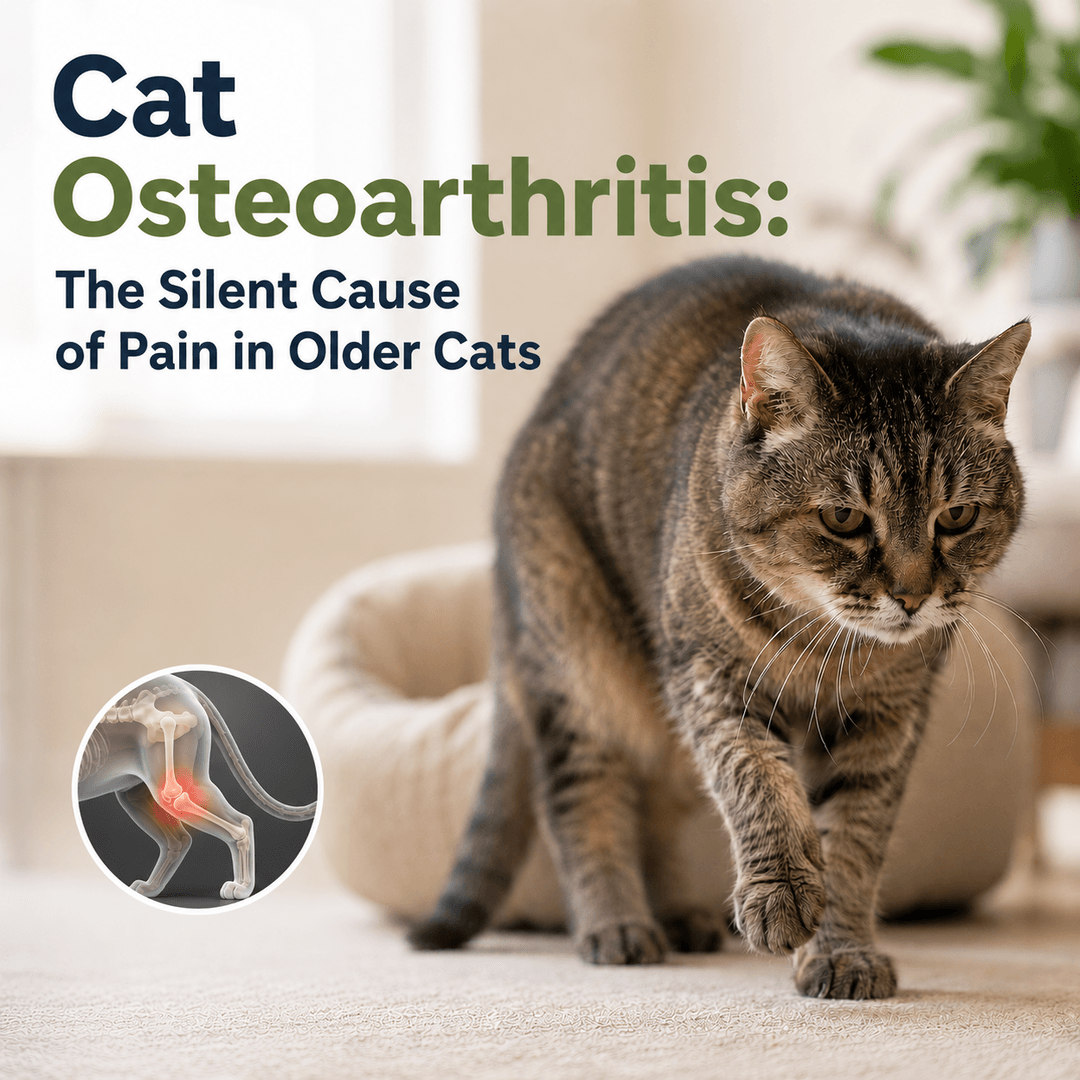
When people think about arthritis, they often picture an older dog struggling to get up or climb stairs. However, many cat owners are surprised to learn that arthritis is also extremely common in cats.
In fact, studies have shown that more than 60% of cats over six years of age and up to 90% of cats over 12 years of age have evidence of osteoarthritis in one or more joints. Yet many cats remain undiagnosed because they are experts at hiding pain and discomfort.
Unlike dogs, cats rarely limp or cry out when they are in pain. Instead, they quietly change their behaviour, and these subtle signs are often mistaken as “normal ageing.”
What Is Osteoarthritis?
Osteoarthritis (OA), also known as degenerative joint disease, is a progressive condition where the cartilage that cushions the joints gradually wears down over time.
Healthy cartilage allows joints to move smoothly and comfortably. When this protective layer deteriorates, the bones begin to rub against each other, leading to:
- Pain
- Inflammation
- Joint stiffness
- Reduced mobility
- Muscle loss
Unfortunately, osteoarthritis cannot be cured, but with early diagnosis and appropriate treatment, many cats can enjoy a significantly improved quality of life.
Why Do Cats Develop Osteoarthritis?
Several factors may contribute to osteoarthritis.
Ageing
The most common cause is simply wear and tear over time. As cats age, the cartilage within their joints gradually becomes less resilient.
Previous Injuries
Cats that have experienced fractures, joint injuries, or trauma earlier in life may be more likely to develop arthritis later.
Obesity
Excess body weight places additional stress on joints and can accelerate joint degeneration.
Joint Abnormalities
Certain congenital or developmental conditions affecting the hips, elbows, or knees may increase the risk of arthritis.
High-Impact Activities
Years of jumping onto high surfaces may contribute to joint wear, particularly in senior cats.
Signs of Osteoarthritis in Cats
Because cats are naturally independent and often hide signs of pain, owners may not immediately recognise arthritis.
Common signs include:
Jumping Less
One of the earliest signs is a reluctance to jump onto furniture, beds, windowsills, or cat trees.
Owners may notice their cat:
- Jumping less frequently
- Using intermediate surfaces to climb
- Hesitating before jumping
- Missing jumps occasionally
Reduced Activity
Cats with arthritis often become less active and spend more time resting.
You may notice:
- Sleeping more
- Playing less
- Reduced exploration around the home
Changes in Grooming
Painful joints can make grooming difficult.
Signs include:
- Matted fur
- Greasy coat
- Dandruff, especially over the lower back
Difficulty Using the Litter Box
Cats may struggle to climb into litter boxes with high sides.
Some cats begin urinating or defecating outside the litter tray because accessing it has become painful.
Behavioural Changes
Pain can affect a cat’s mood and temperament.
Owners may notice:
- Increased irritability
- Avoiding handling
- Reduced social interaction
- Hiding more often
- Becoming less affectionate
Changes in Walking or Posture
Some cats may develop:
- Stiff movements
- Reduced flexibility
- Difficulty climbing stairs
- Altered posture when sitting or lying down
Unlike dogs, obvious limping is relatively uncommon.
Why Is Osteoarthritis Often Missed?
Many owners assume that slowing down is simply part of growing old.
Comments such as:
- “She doesn’t jump anymore.”
- “He’s sleeping more nowadays.”
- “She’s becoming lazy.”
may actually be signs of chronic pain rather than normal ageing.
Cats have evolved to hide weakness as a survival mechanism. As a result, significant arthritis may be present before owners notice obvious changes.
How Is Osteoarthritis Diagnosed?
Diagnosis begins with a thorough veterinary examination.
Your veterinarian may assess:
- Joint flexibility
- Muscle mass
- Mobility
- Signs of pain
- Posture and gait
In many cases, X-rays can help identify changes associated with osteoarthritis, including:
- Bone remodelling
- Joint narrowing
- New bone formation around affected joints
However, it is important to remember that some cats may have significant pain despite relatively mild changes on X-rays.
How Is Osteoarthritis Treated?
Modern arthritis management focuses on improving comfort, mobility, and quality of life.
Weight Management
If a cat is overweight, weight reduction is often one of the most effective treatments.
Even modest weight loss can significantly reduce stress on painful joints.
Pain Management
Veterinary-prescribed pain relief medications may help reduce inflammation and discomfort.
Never give human pain medications to cats unless specifically instructed by a veterinarian, as many can be toxic.
Joint Supplements
Certain joint support supplements may help maintain joint health and reduce inflammation.
Common ingredients include:
- Omega-3 fatty acids
- Glucosamine
- Chondroitin
- Cucumin
- Green-lipped mussel extract
- Undenatured collagen
Your veterinarian can advise which options may be appropriate for your cat.
Environmental Modifications
Simple changes at home can make a big difference.
Consider:
- Ramps or steps to favourite resting spots
- Low-entry litter trays
- Soft bedding
- Food and water bowls placed in easily accessible locations
- Non-slip flooring
Physical Rehabilitation
Some cats benefit from rehabilitation therapies such as:
- Therapeutic laser
- Physiotherapy
- Controlled exercise programs
These approaches may help maintain mobility and muscle strength.
Can Osteoarthritis Be Prevented?
While ageing cannot be prevented, several steps may reduce the risk or severity of arthritis:
- Maintain a healthy body weight
- Encourage regular activity
- Provide balanced nutrition
- Address injuries promptly
- Schedule regular veterinary health checks
Early intervention often leads to better long-term outcomes.
When Should You See Your Veterinarian?
Arrange a veterinary examination if your cat:
- Is over seven years old and becoming less active
- No longer jumps onto favourite surfaces
- Has difficulty climbing stairs
- Is grooming less effectively
- Shows changes in litter box habits
- Appears stiff or uncomfortable
The earlier osteoarthritis is identified, the sooner treatment can begin.
Final Thoughts
Osteoarthritis is one of the most common yet underdiagnosed conditions affecting senior cats. Many cats suffer silently because the signs are subtle and often mistaken for normal ageing.
If your cat is slowing down, jumping less, or behaving differently, it may not simply be “old age.” It could be chronic joint pain.
With early diagnosis, appropriate pain management, weight control, and supportive care, many arthritic cats can remain active, comfortable, and happy for years to come.
A cat that is ageing gracefully should still be able to enjoy life. If you suspect your cat may have arthritis, speak to your veterinarian about a mobility assessment and discuss the options available to help keep them comfortable.