

Cognitive Dysfunction Syndrome (CDS) in Senior Dogs and Cats

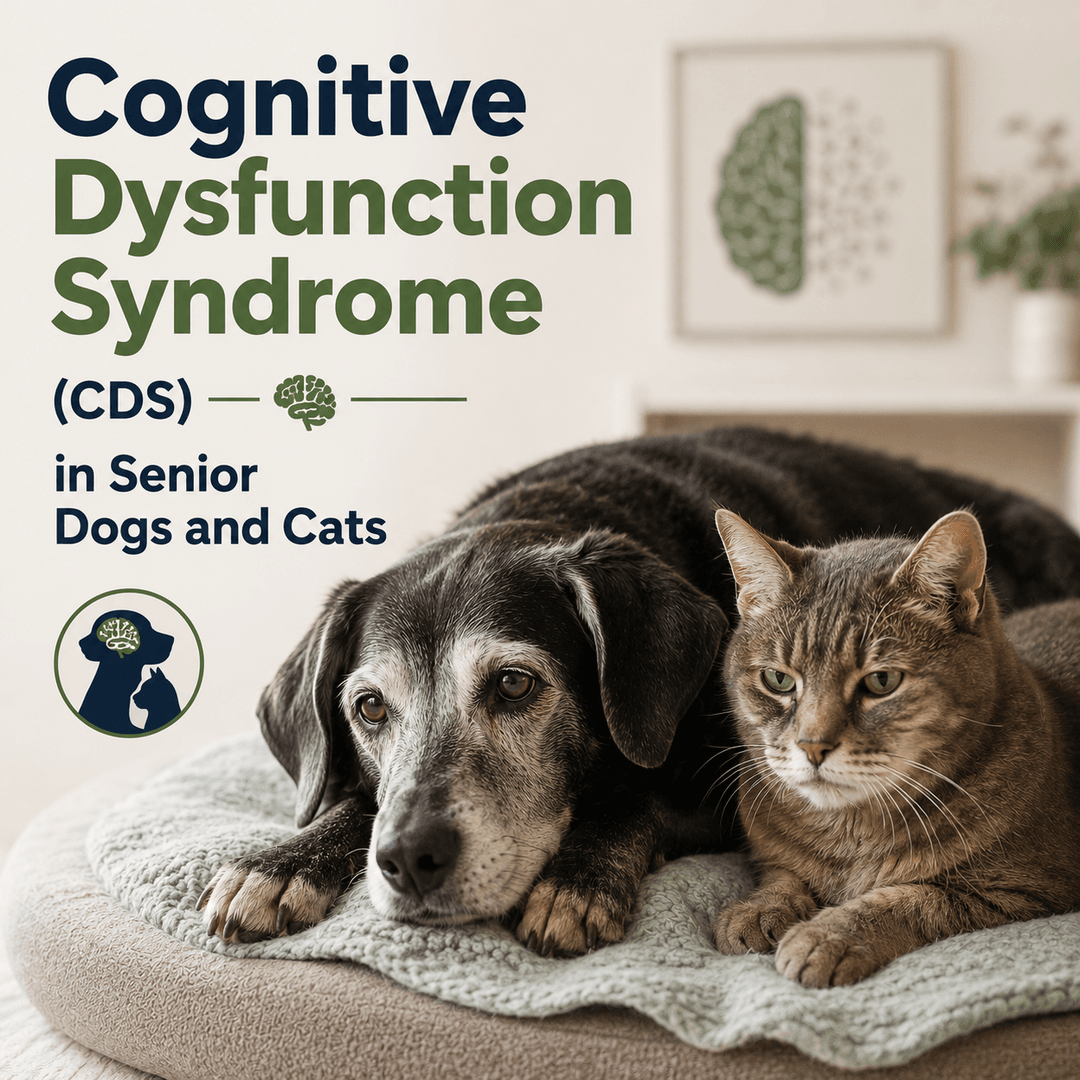
Understanding Dementia in Pets
As our pets live longer, age-related cognitive decline is becoming increasingly common. Similar to Alzheimer’s disease in humans, senior dogs and cats can develop Cognitive Dysfunction Syndrome (CDS), a progressive condition that affects memory, learning, awareness, and behavior.
Studies suggest that up to 28% of dogs aged 11–12 years and over 60% of dogs older than 15 years show signs of cognitive decline. In cats, approximately one-third of cats aged 11–14 years and more than 50% over 15 years may exhibit behavioral changes consistent with CDS.
What Causes Cognitive Dysfunction?
The exact cause is complex and multifactorial. Changes within the aging brain include:
- Accumulation of abnormal proteins (beta-amyloid plaques)
- Reduced blood flow and oxygen delivery to the brain
- Oxidative damage from free radicals
- Loss of nerve cells and neurotransmitters
- Chronic inflammation within the nervous system
These changes gradually impair communication between brain cells, leading to behavioral and cognitive changes.
Common Signs: Remember “DISHA”
Veterinarians often use the DISHA acronym to recognize cognitive decline:
D – Disorientation
- Gets lost in familiar surroundings
- Stares at walls or corners
- Appears confused after waking
- Wanders aimlessly
I – Interaction Changes
- Less interested in family members
- Reduced greeting behavior
- Increased clinginess or anxiety
- Unexplained irritability
S – Sleep-Wake Cycle Changes
- Sleeps more during the day
- Restless or pacing at night
- Night-time vocalization
- Waking owners frequently
H – House Soiling / Hygiene Changes
- Forgets toilet training
- Urinates or defecates indoors
- Reduced grooming in cats
A – Activity Changes
- Less interested in play
- Repetitive behaviors
- Pacing or circling
- Difficulty learning new routines
Additional Signs in Cats
Senior cats may also:
- Meow excessively, especially at night
- Seem forgetful about feeding times
- Appear confused around food or litter boxes
- Become withdrawn or unusually needy
- Stop jumping onto favorite resting places
Important: Not Every Behavior Change Is Dementia
Many medical conditions can mimic cognitive dysfunction, including:
- Arthritis and chronic pain
- Vision or hearing loss
- High blood pressure
- Hyperthyroidism (cats)
- Kidney disease
- Brain tumors
- Diabetes
- Heart disease
This is why a thorough veterinary examination and senior blood screening are essential before diagnosing CDS.
How Is It Diagnosed?
There is no single test for dementia in pets.
Diagnosis is typically based on:
- Detailed history from the owner
- Behavioral questionnaires
- Physical and neurological examination
- Blood and urine testing
- Blood pressure measurement
- Advanced imaging (selected cases)
Can Cognitive Dysfunction Be Treated?
While CDS cannot be cured, early intervention can significantly improve quality of life and slow progression.
1. Mental Enrichment
Keep the brain active:
- Food puzzles
- Scent games
- Gentle training exercises
- New walking routes for dogs
- Interactive toys for cats
2. Environmental Support
- Maintain a consistent routine
- Provide night lights
- Avoid unnecessary furniture rearrangement
- Ensure easy access to food, water, and litter trays
3. Nutrition
Special diets and supplements may support brain health:
- Omega-3 fatty acids (especially DHA)
- Medium-chain triglycerides (MCTs)
- Antioxidants
- Vitamin E
- Curcumin
- Beta-glucans
4. Medications
Certain medications may help selected patients by improving brain neurotransmitter activity and blood flow. Your veterinarian can determine whether these are appropriate.
Prevention: Start Before Symptoms Appear
Research suggests that maintaining brain health throughout life may delay cognitive decline.
- ✔ Regular exercise
- ✔ Healthy body weight
- ✔ Mental stimulation
- ✔ Social interaction
- ✔ Routine senior health checks (every 6 months after age 7)
- ✔ Early management of chronic diseases
When Should Owners Seek Veterinary Advice?
If your senior dog or cat starts:
- Getting lost in familiar places
- Pacing or vocalizing at night
- Forgetting house training
- Showing sudden personality changes
- Appearing confused or anxious
Don’t assume it is “just old age.”
Early diagnosis allows us to rule out treatable diseases and provide support that can greatly improve your pet’s comfort, confidence, and quality of life.
Growing old is inevitable, but growing old confused and anxious doesn’t have to be. With early recognition and proper care, many senior pets can continue enjoying happy, comfortable golden years with their families.